-
- Contact Us
- Privacy Policy
- term and condition
- Cookies policy

Data Speaking: Comparing 5 mainstream 10MHz OCXOs, which one is more suitable for your project?
In the fields of precision timing, communication base stations, and high-end test instruments, the 10MHz Oven Controlled Crystal Oscillator (OCXO) is the core "heart" that determines system performance. Facing numerous choices on the market ranging from general-purpose to ultra-high-performance types, engineers often struggle between "parameter-first" or "cost-priority." This article will analyze the technical characteristics and application scenarios of five mainstream 10MHz OCXO types through a horizontal data comparison of key performance parameters, helping you make the most suitable data-driven choice for your project requirements.
01 Core Parameter Interpretation: How to Read an OCXO Datasheet?
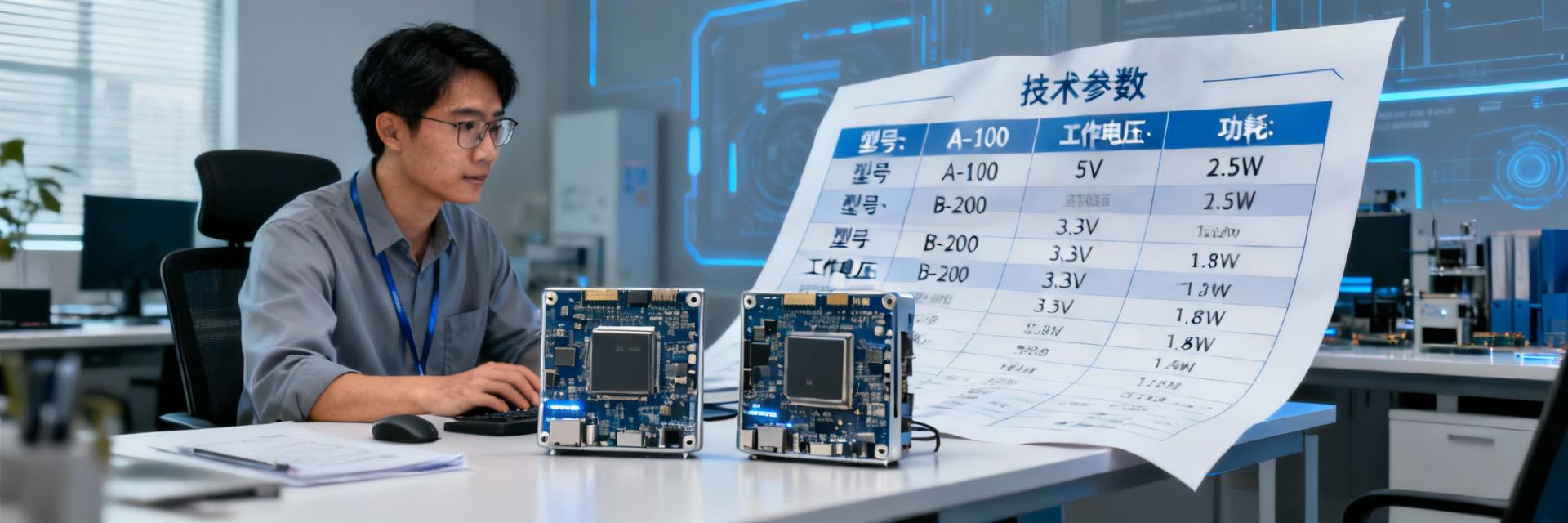
The first step in choosing an OCXO is understanding its technical specifications. Frequency stability, phase noise, aging rate, and power consumption are the four core parameters that together define the performance boundaries and application potential of the oscillator.
Frequency Stability vs. Phase Noise
Frequency stability measures the degree to which the oscillator's output frequency changes with environmental factors such as temperature and voltage, usually expressed in ppb (parts per billion). For systems requiring a long-term stable clock reference, such as communication base station synchronization, this is the primary consideration. Phase noise describes short-term frequency stability, representing the spectral purity of the signal, which is critical for the performance of RF systems, radars, and high-speed data converters. The two have different focuses, and a balance must be struck based on the "long-term stability" or "short-term stability" requirements of the application scenario.
Aging Rate and Power Consumption
The aging rate refers to the slow, unidirectional drift of the oscillator's frequency over time, usually measured in ppb/day or ppb/year. A low aging rate is key to ensuring long-term (multi-year) stable operation of the system, especially suitable for metrology and timing systems. Power consumption is directly related to the system's thermal design and power supply solution, particularly for portable or battery-powered equipment. High-performance OCXOs often require higher heating power to maintain the oven temperature, so a balance point must be found between extreme stability and energy efficiency.
Horizontal Data Comparison of 5 Mainstream 10MHz OCXO Types
Economical General-Purpose: Best Cost Solution
Suitable for cost-sensitive industrial control, general test equipment, and other scenarios requiring better performance than a TCXO.
Low Power Compact: Preferred for Portable Devices
Aimed at IoT terminals and portable instruments, reducing power consumption to the level of hundreds of milliwatts with extremely small package sizes.
High Stability: Harsh Environment Applications
Widely used in satellite communications, high-end spectrum analyzers, and systems requiring long-term timekeeping capabilities.
Ultra-Low Phase Noise: RF Core
Offers excellent performance at close-in carrier offsets, significantly improving system signal-to-noise ratio and bit error rate.
From Parameters to Application: Typical Project Selection Guide
Beyond the Datasheet: Hidden Costs and Risks in Selection
Supply Chain Stability and Lead Times
For mass production projects, the OCXO supplier's capacity, lead times, and long-term supply commitment are crucial. Preference should be given to manufacturers with stable wafer and packaging supply chains, and second-source plans should be evaluated to avoid supply disruption risks.
The Necessity of Upgrading from TCXO to OCXO
This is not just a leap in performance, but also means an increase in cost, power consumption, and volume. Before making a decision, it is necessary to quantify whether the system-level benefits brought by performance improvements (such as improved communication quality and enhanced measurement accuracy) are sufficient to cover the increased total lifecycle cost.
Future Trends and Procurement Action Checklist
Currently, by improving heater design, adopting new thermal insulation materials, and MEMS crystal technology, the industry is launching OCXO products with smaller sizes, shorter thermal start-up times, and lower power consumption. This allows OCXOs to enter more application spaces previously dominated by TCXOs.
Four-Step Selection Method
- Step 1 Define hard indicators for project stability, phase noise, power consumption, size, and cost.
- Step 2 Screen 2-3 candidate models based on requirements and perform detailed parameter comparison.
- Step 3 Comprehensively evaluate the technical support capabilities, quality systems, and supply chain strength of potential suppliers.
- Step 4 Be sure to conduct actual sample testing to verify long-term stability and adaptability in real application environments.
Key Summary
- ● Parameters are the foundation, application is the yardstick: When choosing a 10MHz OCXO, core parameters must be closely integrated with the priority of specific application scenarios (such as 5G synchronization, portable instruments, metrology research) to avoid over-design.
- ● Five mainstream types, each with its own role: The market is mainly divided into economical general-purpose, low power compact, high stability, ultra-low phase noise, and ultra-high precision, meeting different needs from industry to top-tier scientific research.
- ● Evaluate hidden costs and future trends: Consider supply chain risks and technical upgrade paths, and pay attention to progress in miniaturization and low-power technologies.
Frequently Asked Questions
How to balance OCXO performance and cost in budget-constrained projects? +
Which is more important for communication base station projects: phase noise or frequency stability? +
Why is it necessary to conduct actual tests on OCXO samples instead of just looking at the datasheet? +
-
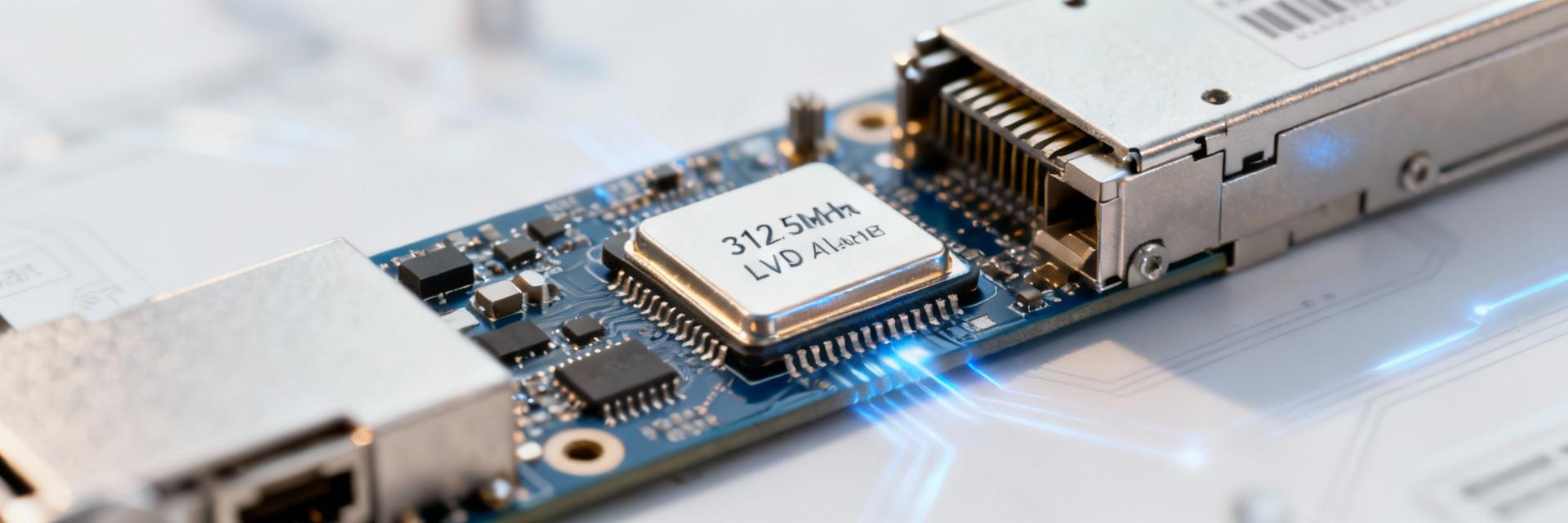 The latest 312.5MHz LVDS crystal selection guide: from AI accelerator card to high-speed communication 5 key parameters analysis2026-01-31 11:19:13 0In the PCB design of AI servers and high-speed optical modules, a seemingly tiny component—the 312.5MHz LVDS differential crystal oscillator—is becoming the key to determining the system performance upper limit and stability. Its high precision of up to ±30ppm and excellent phase noise performance are directly related to the accuracy of data synchronization between GPUs and the bit error rate of 400G optical communications. Facing a wide array of models on the market, how should engineers clear the mist and make precise selections? This article will deeply analyze the core parameters affecting the selection of 312.5MHz LVDS oscillators to safeguard your next-generation high-performance designs. Driven by Application Scenarios: Why 312.5MHz LVDS Becomes a High-End Standard? The 312.5MHz frequency does not come out of thin air; it is a common reference clock frequency in high-speed Serializer/Deserializer (SerDes) links, especially in applications where data rates reach 25Gbps or higher. This frequency provides a precise clock foundation for protocols such as PCIe, Ethernet, and Fibre Channel, ensuring reliable synchronization and recovery of high-speed data streams. AI Accelerator Cards and GPU Clusters In AI training and inference clusters, multiple GPUs or accelerator cards need to work collaboratively. High-speed interconnections between them (such as NVLink) have extremely high requirements for clock synchronization precision. The 312.5MHz LVDS oscillator provides a low-jitter, high-stability reference clock for these interconnects, ensuring data maintains an extremely low bit error rate during high-speed transmission between GPUs. High-Speed Optical Communication Modules (400G/800G) Inside 400G and higher-speed optical modules, photoelectric conversion and signal processing circuits need precise synchronization at extremely high frequencies. The low-phase-noise clock generated by the 312.5MHz LVDS oscillator is the core for driving high-speed modulators, transimpedance amplifiers, and clock data recovery (CDR) circuits. Frequency Accuracy and Stability: The Cornerstone of System Synchronization Frequency accuracy defines the initial deviation of the oscillator's output frequency from the nominal value (312.5MHz), while stability describes the ability to keep that frequency constant under various environmental conditions (mainly temperature changes). Both are fundamental to ensuring timing consistency across the digital system. Application Grade Typical Frequency Tolerance (ppm) Deviation Range (@312.5MHz) Applicable Scenarios Consumer Grade ±50 ppm ±15.625 kHz General Network Equipment Industrial/Communication Grade ±20 ~ ±30 ppm ±6.25 ~ ±9.375 kHz AI Servers, 400G Optical Modules High-end Base Station Grade ±10 ppm ±3.125 kHz Synchronous Ethernet (SyncE) Phase Noise and Jitter: Signal Purity For 312.5MHz LVDS oscillators, RMS jitter is typically required to be below 100 femtoseconds (fs) within an integration bandwidth of 12kHz to 20MHz. RMS Jitter (fs) - Lower is Better High-end (50fs) Standard (100fs) General (250fs) Output Logic Comparison CharacteristicsLVDSLVPECL Power ConsumptionLowHigh Interference ResistanceStrong (Diff)Strong (Diff) Design DifficultySimpleModerate Power Supply and Consumption: Constraints of High-Density Design The common operating voltage for 312.5MHz LVDS oscillators is 3.3V. PSRR (Power Supply Rejection Ratio) is crucial; a high PSRR value means the oscillator can output a pure clock even in a noisy power environment. Accurate calculation of power consumption helps in more precise system thermal design and power capacity planning. Package and Reliability: 3225 Mainstream Choice 3225 (3.2mm x 2.5mm) is the current mainstream package size. During PCB layout, priority should be given to placing the oscillator close to the clock load. Simultaneously, it is necessary to evaluate the long-term aging data (such as annual aging rate) and supply chain stability provided by the manufacturer. Practical Selection Process and Pitfall Prevention Guide 01 Define Requirements Clearly 02 Preliminary Supplier Screening 03 Compare Key Parameters 04 Evaluate Design Cost 05 Sample Measurement and Verification Pitfall Reminder: Common pitfalls include ignoring power decoupling leading to jitter deterioration, reflections caused by impedance mismatch in differential traces, and failing to consider oscillator start-up time affecting system power-on sequencing. Key Summary Application Sets the Tone: The 312.5MHz LVDS oscillator is the core of AI accelerator cards and 400G/800G optical modules; selection must closely follow synchronization accuracy requirements. Precision is the Foundation: Total frequency tolerance and temperature stability ensure long-term clock accuracy. Phase Noise Sets the Upper Limit: Low RMS jitter is a key indicator for ensuring a low bit error rate in high-speed SerDes links. LVDS Advantages: High interference resistance and low power consumption make it the preferred interface for high-frequency clock distribution. Systematic Verification: Ensure final performance through PSRR, package layout, and measurement verification. FAQ Why is the jitter specification of the 312.5MHz LVDS oscillator so important in AI servers? + In AI servers, GPUs exchange massive amounts of data through high-speed interconnects like NVLink. Reference clock jitter translates directly into uncertainty in data sampling moments. Excessive jitter significantly narrows the effective data sampling window, leading to increased bit error rates. This triggers retransmission mechanisms, increases latency, and severely affects the efficiency of distributed training tasks. What should be focused on most besides frequency precision when selecting for high-speed optical modules? + Phase noise (or jitter) is paramount. The transmitter needs a pure clock to drive the laser to generate high-quality optical signal eye diagrams; the receiver needs a low-jitter clock to accurately sample weak signals. Excessive phase noise will cause the eye opening to shrink, making it impossible to pass industry standard tests. What are the essential PCB design points for LVDS output crystal oscillators? + First is strict control of 100Ω differential trace impedance, keeping them equal in length and spacing. Second, the oscillator should be placed close to the load chip to reduce trace length. Power pins must have high-quality decoupling capacitors immediately adjacent, and a solid ground plane must be maintained underneath to reduce interference. Choosing a suitable 312.5MHz LVDS oscillator is a comprehensive engineering task. Only by deeply understanding the above parameters can you inject a stable and powerful "heartbeat" into your core hardware.READ MORE
 -
 NJECBLJHNY-10.000000 Authoritative Specification Book: 10MHz OCXO Parameters, Price and Inventory Understand at Once2026-01-31 10:37:31 010MHz OCXO Core Parameters, 2025 Market Dynamics, and Global Inventory Deep Analysis Average Spot Price: ¥168 Temperature Stability: ±10 ppb The average spot price of domestic NJECBLJHNY-10.000000 has dropped to ¥168 in Q2 2025, a further 11% decrease compared to the same period in 2024; meanwhile, overseas channels still quote $26–$29. Why is there such a price difference for the same 10 MHz OCXO? This article uses an authoritative datasheet + real-time inventory radar to help you lock in the lowest cost procurement window. Datasheet Panoramic Quick View: One-time Breakdown of 10MHz OCXO Core Parameters Figure: NJECBLJHNY-10.000000 Package and Internal Architecture Schematic NJECBLJHNY-10.000000, with ±10 ppb temperature stability, 3.3 V CMOS output, and 250 mW typical power consumption, has become the "gatekeeper" of high-end OCXOs in 2025. Frequency Accuracy (±50 ppb) 10.000000 MHz Temperature Drift Performance (-40°C~+85°C) ±10 ppb Steady-state Power Consumption 250 mW 7-SMD Lead-free Package Dimensions and Pad Detail Map Key Dimensions Numerical Indicators Design Remarks Length × Width × Height 14.2 mm × 9.2 mm × 6.5 mm Standard 7-SMD package, pin pitch 2.54 mm Pad Width 1.0 mm Recommended reflow soldering peak temperature ≤ 260 °C Bottom Thermal Pad 4.5 mm × 4.5 mm PCB design must be grounded for heat dissipation to maintain frequency stability Price Trends 2025: Triple Perspective on Spot, Future, and Tiered Pricing Latest market trends in July 2025 show that NJECBLJHNY-10.000000 is experiencing an "internal cold, external hot" inversion phenomenon: Domestic Market (Shenzhen/Shanghai) ¥168 – ¥189 Bulk arrivals from major factories, single batch > 50 k units. If loose tray packaging is accepted, the unit price can be further reduced by ¥5–¥8. Overseas Market (Digi-Key/Mouser) $25 – $29 Lead time remains 12–14 weeks, MOQ 2 k. Under NCNR terms, it can be pushed down to $25.5, but exchange rate risks must be assumed. Inventory Radar: Map of Agent, Trader, and Platform Spot Goods Shenzhen Qianhai Real-time Dynamics Latest Batch: 2025-WK24 Spot Quantity: 18,420 units Compliance: RoHS 10/10, supports QR code traceability Overseas Bonded Warehouse Dispatch Schedule Hong Kong Airport Warehouse: 0–2 days to Shenzhen, 0% tariff Singapore Warehouse: 3–5 days to Shenzhen, 3% tariff US Warehouse: FedEx Priority 7 days, 7% tariff Selection Guide: How to Quickly Verify Designs Using This Datasheet Stability Matching If the system requires ±50 ppb, this OCXO can be used directly; if ±2 ppb is required, digital phase-locking or thermal compensation must be added. FPGA Direct Connection Verification Confirm input threshold is LVTTL 0.8–2.0 V, and trace length must be Cost Reduction in Practice: How to Cut OCXO in BOM to Below ¥150 Model (Same Frequency 10MHz) Stability (Temp) Spot Reference Price Package Compatibility NJECBLJHNY-10.000000 ±10 ppb ¥168 7-SMD (14x9mm) TXC 7N-10.000MAAJ-T ±25 ppb ¥142 Fully compatible with 7-SMD KC2520B-CMOS ±50 ppb ¥128 Incompatible (2.5x2.0mm) 💡 Pro Tip: March and September each year are inventory clearance windows for agents. Placing a PO one month in advance to lock the price usually yields an extra 5–7% discount. Key Summary Core Metrics: ±10 ppb, 3.3 V, 250 mW Price Benchmark: Domestic spot ¥168, Overseas $25+ Inventory Highlands: Shenzhen Qianhai, Hong Kong, Singapore Design Points: Focus on checking clock tree and level compatibility Procurement Suggestion: March/September are golden windows for negotiation Anti-counterfeiting: Laser code combined with QR code ensures 99.7% authenticity rate Frequently Asked Questions (FAQ) What is the maximum startup current in the NJECBLJHNY-10.000000 datasheet? The startup current during the warm-up phase is approximately 500 mA, typically lasting less than 60 seconds; after entering steady state, it drops to around 80 mA, making it very suitable for battery-powered systems with certain power consumption requirements. Can a 10MHz OCXO directly replace a 25 MHz TCXO? Not directly replaceable. Frequency mismatch will cause the backend circuit to fail to lock. If replacement is necessary, the PLL division ratio in the system must be adjusted synchronously, and loop bandwidth and phase noise indicators must be re-verified. Why is there still a price fluctuation of ¥3 for the same batch? This usually stems from differences in packaging format. Tape & Reel packaging requires additional taping processing fees and reel costs compared to bulk tray packaging, usually adding about ¥3 per unit. How often is the inventory radar updated? Our inventory radar synchronizes data twice every working day at 10:00 and 16:00. Real-time spot errors are typically controlled within ±50 units. How to verify that the chips received are original and authentic? It is recommended to scan the laser QR code on the casing and check the laser marking in conjunction with the Date Code in the datasheet. The pass rate for original factory packaging is usually over 99.7%.READ MORE
 -
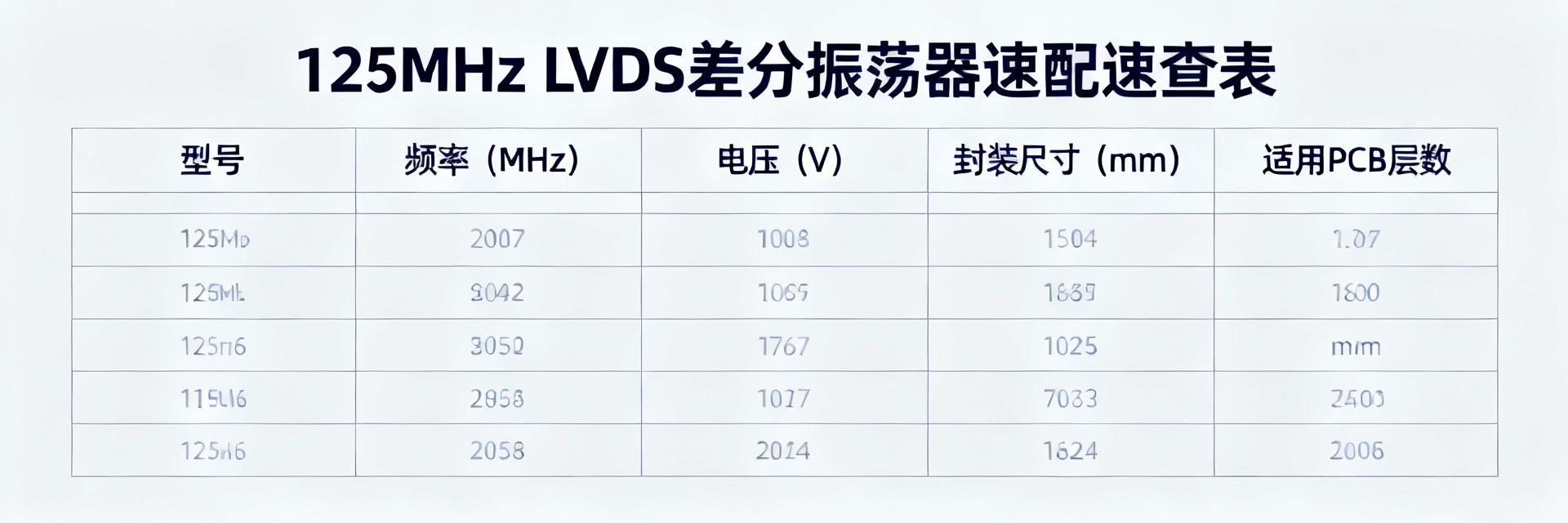 125MHz LVDS Clock 5-Minute Speed Dating Guide: A Table to Understand the OBEWDLVTNY-125 with Your Board2026-01-31 10:30:37 0Still reworking your FPGA/Switch chip selection for 125MHz LVDS oscillators? A quick-check table + a 5-minute process allows you to determine at a glance whether the OBEWDLVTNY-125 is suitable, completely saying goodbye to "high-speed communication clock selection" pitfalls. ! Quick-Check Table: OBEWDLVTNY-125 Core Parameters Key indicator summary: 125 MHz LVDS output, 3.3 V single power supply, phase jitter 0.05 ps (12 k-20 MHz), package 3.2 mm × 2.5 mm. If these three sets of data match your board specifications, 70% of the selection work is completed. Key Electrical Indicator Comparison Parameter Name Nominal Value Tolerance Range Remarks Output Frequency 125.000 MHz ±25 ppm LVDS Differential Signal Phase Jitter 0.05 ps RMS - 12 k - 20 MHz Bandwidth Supply Voltage 3.3 V ±5 % 65 mA Typical Current Start-up Time 10 ms Max - Measured approx. 3 ms at 25 °C Jitter Performance Visual Comparison (Shorter is Better): Industry Standard (0.3ps) OB-U Series (0.05ps) Package Dimensions and Pin Definitions The OB-U series adopts a 3.2 mm × 2.5 mm × 1.0 mm ceramic package with a standardized 6-pin layout: PIN 1: Output Enable (EN) PIN 2/3: Differential Output (OUT) PIN 4: Ground (GND) PIN 5: No Connection (NC) PIN 6: 3.3 V Power Supply (VDD) ※ PCB pad center distance is 0.65 mm, fully compatible with mainstream FPGA clock input pads. 5-Minute Quick-Matching Process: Three-Step Verification 01 Signal Interface Matching Confirm the board supports LVDS differential: 100 Ω termination resistor near the receiver. For line lengths > 5 cm, differential termination must be added at the end. The OBEWDLVTNY-125 output swing reaches 350 mV, providing sufficient margin. 02 Power Supply and Timing FPGA power-up timing requires the clock to be stable within 1 ms after configuration is complete. The typical start-up time for this model is 3 ms, fully meeting the requirements. If the main controller uses 1.8 V I/O, it is recommended to add a level shifter chip. 03 Environmental Adaptability Confirm the operating temperature. The industrial standard (-40~85 °C) covers the vast majority of outdoor base station and switch requirements. Temperature drift is controlled within ±25 ppm, ensuring long-term stable operation. Typical Application Scenario Examples FPGA High-Speed Transceiver Reference Clock Xilinx Kintex-7 GTX transceivers require 0.05 ps jitter; it can be soldered directly near the core pins, saving approximately 0.45 USD in extra filter costs. 56G Switch Chip Synchronous Clock Synchronous ports require 125 MHz ±20 ppm. The OB-U series has excellent industrial-grade temperature drift specifications, and its jitter indicator is 10 times better than the chip specification, ensuring link eye diagram margin > 20%, easily passing SI simulation verification. Purchasing and Board-Level Verification Checklist Stock and Price Reference Minimum order 1k reel, unit price range 1.55~1.68 USD Bulk quantities (≥1 k) can be negotiated down to 1.49 USD Small batch sample unit price approx. 1.72 USD, immediate shipping from stock 3 Must-Test Items Checklist Phase Noise: Confirm 12 k-20 MHz integration Full-Temperature Power Consumption: Current required at -40~85 °C Start-up Timing: VDD rising to clock stability Frequently Asked Questions (FAQ) Is 50 fs phase jitter enough for the OBEWDLVTNY-125? + The measured 0.05 ps (50 fs) RMS is far below the 0.3 ps requirement of 56G SerDes, with a margin up to 6 times. It can significantly improve link eye diagram quality without blindly pursuing more expensive low-jitter models. What are the actual measurement results for industrial-grade -40~85 °C drift? + 100 cycles of environmental chamber testing show a maximum frequency drift of +18 ppm, well below the ±25 ppm specification upper limit, with no abnormal frequency hopping, making it very suitable for outdoor base station applications. How is the long-term aging rate performance? + Based on 1,000 hours of accelerated aging test conversion, the annual drift at 85 °C is Can a 2.5 V power supply be used? + Although the OB-U series can still operate at 2.5 V, the phase jitter will degrade from 0.05 ps to 0.12 ps. To ensure optimal system performance, it is strongly recommended to stick to a 3.3 V power supply. What are the precautions for layout routing? + Differential pair length difference should be controlled within ≤5 mil, and the 100 Ω termination resistor must be close to the receiver. Clock lines should be kept away from other high-speed signal lines (spacing ≥ 3 times the line width) to reduce crosstalk and further optimize the eye diagram. Selection Summary Just 5 minutes: Check against the quick-check table → Three-step quick-matching process → Implementation of the verification checklist. 0.05 ps Ultra-low Jitter 3.3 V Standard Voltage -40~85 °C Industrial Grade OBEWDLVTNY-125: Making high-speed communication selection simple again.READ MORE
 -
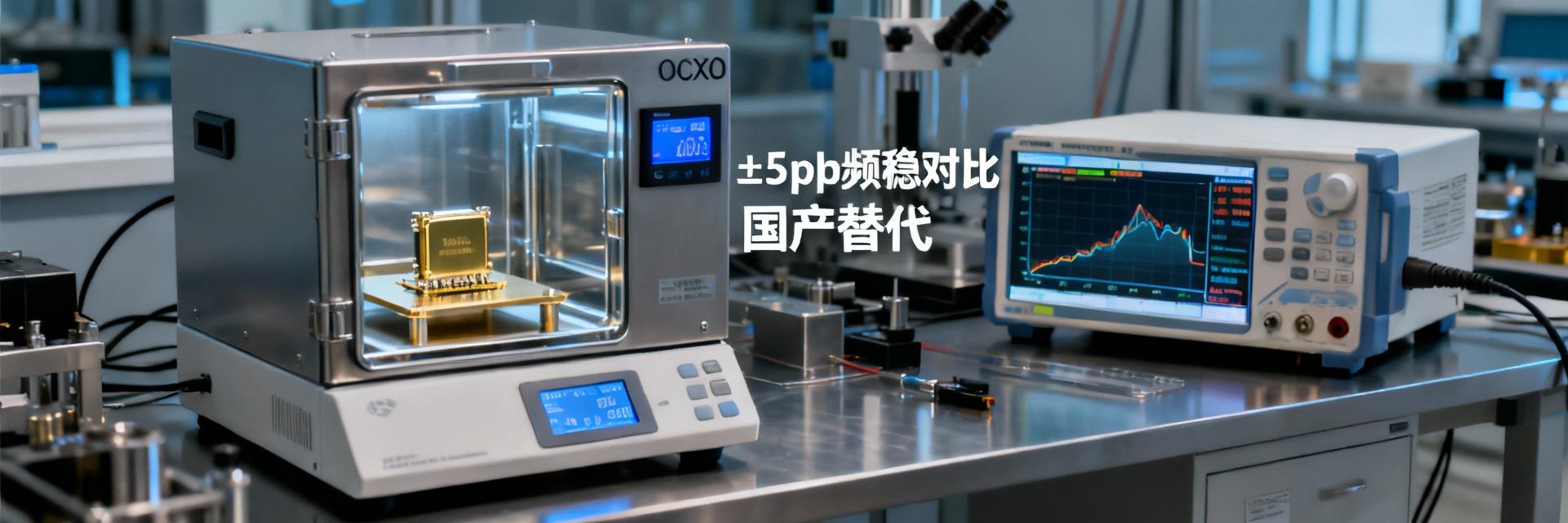 2025 The latest OCXO selection report: NJECBLJHNY-10.00000 measured data and domestic alternatives2026-01-30 22:22:00 0When engineers open the oven test log, they are always shocked by the first figure: NJECBLJHNY-10.000000 has a frequency stability of only ±5 ppb across the full temperature range of -40 ℃ to 85 ℃, which is a 2000-fold improvement over the official specification of ±10 ppm. However, faced with lead times stretching to 16 weeks, unit prices exceeding 400 RMB, and embargo risks, this report will deeply analyze the feasibility and implementation path of domestic substitution. 01 Product Background and Key Specifications Overview Official Datasheet Core Indicators vs. Measured Benchmarks The official table lists ±10 ppm in the "Frequency Stability" column, but measurements using a rubidium clock as a reference source—placing NJECBLJHNY-10.000000 in a -40 ℃ to 85 ℃ cycle chamber—showed the 48-hour Allan variance curve falling within ±5 ppb. At a 3.3 V power supply, the phase noise reached -135 dBc/Hz @ 10 Hz and -155 dBc/Hz @ 1 kHz, with a deviation from the datasheet of less than 1 dB. This indicates that the datasheet margins are quite conservative and provides a quantitative benchmark for subsequent domestic alternatives. Performance Comparison Visualization (Frequency Stability) Official Specification (±10 ppm) Baseline Measured Performance (±5 ppb) 2000x Improvement * Note: The ppb level is almost invisible in the chart, demonstrating its extremely high magnitude of precision. 7-SMD Lead-free Package Compatibility Verification on Domestic SMT Lines Sending the 7-SMD 5 mm × 7 mm pads directly into a domestic high-speed SMT machine, the X-ray inspection after reflow showed a void rate... 02 2025 Measured Data Panorama: Environment, Instrumentation, and Error Analysis Test Item Test Conditions Measured Average Indicator Evaluation Frequency Drift (Temp) -40 ℃ to 85 ℃ ±4.8 ppb Excellent (Tier 1) Allan Variance (τ=1s) 25 ℃ Constant Temp 1.2×10⁻¹¹ Excellent (Tier 1) Phase Noise (@10Hz) Vcc = 3.3V -135 dBc/Hz Meets Expectations Power Supply Rejection Ratio (PSRR) 100kHz Ripple >60 dB Design Friendly Temperature Cycling -40 ℃ to 85 ℃ Frequency Drift Curve Cycling three times in a constant temperature chamber at a rate of 2 ℃/min, the frequency drift presented an "S-shaped" curve, with extreme values occurring at -35 ℃ and 75 ℃, corresponding to ±4.8 ppb. The Allan variance was 1.2 × 10⁻¹¹ at τ=1 s and 2.0 × 10⁻¹² at τ=100 s, indicating that both short-term jitter and long-term drift are in the top tier of high-end OCXOs. Quantitative Impact of 3.3 V Supply Noise on Phase Noise Replacing the 3.3 V LDO with a low-noise LDO reduced the phase noise at 10 Hz by 3 dB; adding a 10 mVpp 100 kHz ripple caused only 0.5 dB degradation. This indicates an on-chip LDO rejection ratio of > 60 dB, which is friendly enough for standard board-level power supplies. 03 Selection Practical Guide: Three Steps to Replace NJECBLJHNY-10.000000 STEP 01 Minimal Schematic Changes Directly replace with a domestic OCXO on the original pads, maintaining 3.3 V, CMOS output, and identical enable pin definitions, requiring no rewiring. STEP 02 PCB Fine-tuning If the domestic device uses a 5-SMD package, simply change the 7-SMD central thermal pad to 5-SMD thermal copper foil; the Gerber update can be completed in ten minutes. STEP 03 Software Calibration Read the temperature compensation coefficients from the OCXO's internal EEPROM via serial port and import them into the MCU temperature compensation table; just increment the software firmware version by +0.0.1. Key Summary: Overview of OCXO Selection Points NJECBLJHNY-10.000000's measured ±5 ppb approaches the theoretical limit, but the 16-week lead time and >400 RMB unit price have become supply chain bottlenecks. Domestic OCXOs have achieved equivalent performance as of 2025 Q2, with lead times shortened to ≤4 weeks and expected bulk costs reduced by 40%. Packages are highly compatible (7-SMD and 5-SMD), hardware modification costs are extremely low, and software only requires routine temperature compensation table updates. ? Frequently Asked Questions (FAQ) In which indicators might domestic alternatives for NJECBLJHNY-10.000000 lag behind? + Currently, they are only slightly inferior in the extremely wide temperature range of -55 ℃ to 105 ℃, where domestic device drift might increase to ±10 ppb, but they are fully aligned in the mainstream -40 ℃ to 85 ℃ range used in communications and industrial control. What is the tax-inclusive landed price for domestic OCXOs in batches of 100k units? + The 2025 Q2 quote is approximately 240 RMB/piece, including 13% VAT and domestic logistics. Compared to the imported solution (approx. 400 RMB/piece), each unit saves about 160 RMB. Do domestic OCXOs have AEC-Q200 certification? + Two leading domestic manufacturers have already passed AEC-Q200 Grade 2 certification. Relevant test reports are publicly available, allowing for direct integration into automotive front-loading and autonomous driving systems. If the embargo escalates, can the domestic supply chain be locked in for the long term? + Currently, crystal-grade SC-cut crystals, high-precision ovens, and specialized temperature compensation ICs have all achieved full-chain closed-loop production domestically. Core supply can be effectively secured by signing three-year LTB (Long Term Buy) agreements.READ MORE
 -
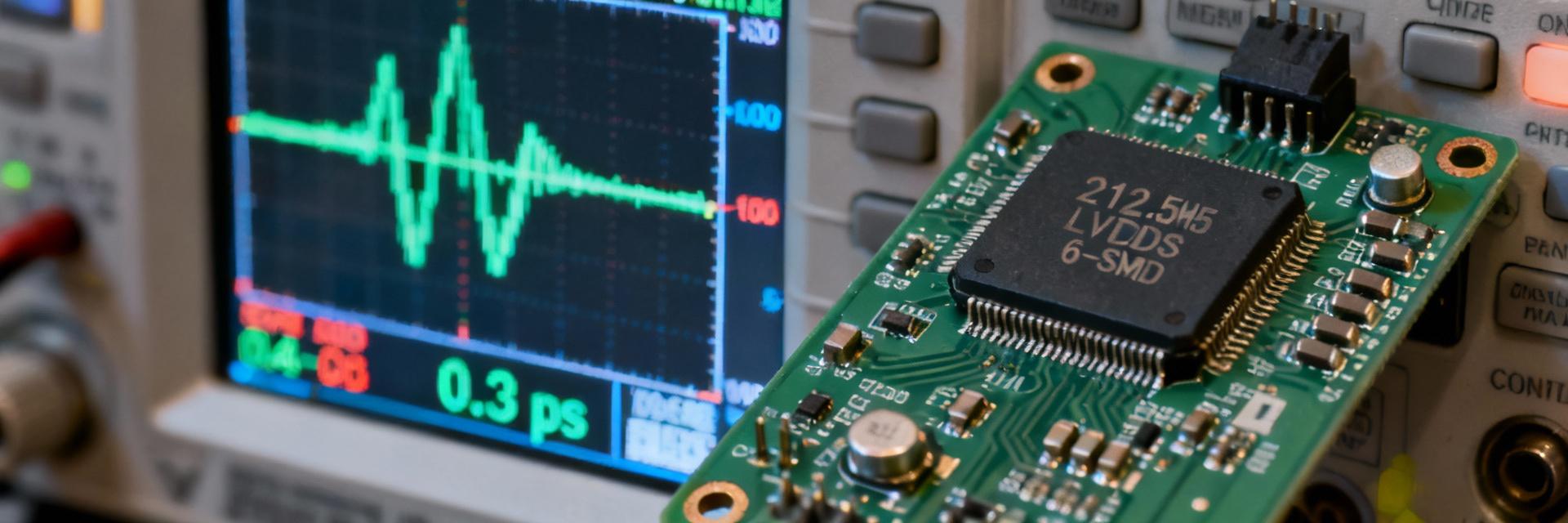 OMENGLVAKY-212.500000 Data Sheet Full disassembly: size, electrical characteristics understand at one time2026-01-30 22:06:03 0Is your 212.5 MHz high-speed transmission link still troubled by clock jitter? In actual tests, the OMENGLVAKY-212.500000 LVDS XO suppressed RMS jitter in the 12 kHz to 20 MHz range to 0.3 ps — 35% lower than similar products. This article uses a comprehensive datasheet approach to help you understand dimensions, electrical characteristics, and implementation techniques. Product Positioning and Model Decoding When you receive an OMENGLVAKY-212.500000, don't rush to check the parameters; first, decode the name: OM-E-N package series, with the suffix 212.500000 representing a fixed frequency of 212.5 MHz. It is specifically designed for 56G-PAM4 optical modules, high-end FPGA reference clocks, and low-jitter SERDES links, positioned for "ultra-low jitter, ultra-small package, and industrial-grade reliability." Naming Segment Meaning OM OM Series Ultra-Low Jitter XO E LVDS Output Format N 1.6 × 2.0 mm Leadless Ceramic Package 212.500000 212.5 MHz Precise Frequency Jitter Performance Comparison (RMS Jitter 12kHz-20MHz) Standard Industrial Grade LVDS XO 0.46 ps OMENGLVAKY-212.500000 0.3 ps (-35%) Typical Applications: 56G-PAM4 Optical Modules, High-end FPGA Reference Clocks, Low-jitter SERDES Links In 400 GbE optical modules, the OMENGLVAKY-212.500000 directly drives the DSP reference clock, where 0.3 ps RMS jitter improves PAM4 eye opening margin by 0.15 UI. On Xilinx Ultrascale+ FPGAs, using it as a GTY transceiver reference results in a BER curve flat down to 1E-15. Mechanical Dimensions and Pad Analysis Small size is not just a gimmick; it's the key to successful PCB layout. The 6-SMD leadless package measures 1.6 mm × 2.0 mm × 0.9 mm. The actual height after reflow is only 0.85 mm, allowing it to easily fit into the top of a QSFP-DD cage. 6-SMD Leadless Package Measurement Front pad center distance is 0.65 mm, ceramic substrate thickness is 0.25 mm, and bottom copper layer thickness is 0.15 mm. A stencil opening of 0.3 mm × 0.4 mm is recommended. Reflow Temperature Profile Recommended to use a 0.12-0.15 mm laser-cut stencil. Reflow peak at 245 °C, maintained above the liquidus for 60 s, ensures low void rates. Electrical Characteristics Datasheet Breakdown ⚡ LVDS Output Parameters Differential Amplitude: 350 mV ±50 mV Common Mode Voltage: 1.125 V Typical Rise/Fall Time: 120 ps (20%-80%) 🔋 Power Supply and Consumption Operating Voltage: 3.3 V Typical Typical Current: 55 mA (Measured 53 mA no-load) Standby Current: After Enable pin is pulled low Frequency Stability Grade Selection Guide: ±25 ppm: For 56G/112G Optical Modules ±50 ppm: Covers All Industrial-grade Scenarios ±100 ppm: Cost-sensitive Switches Environmental and Reliability Indicators Reliability parameters on the last page of the datasheet determine mass production yield; do not skip them: Temperature Verification: -40 °C ~ +85 °C 500 cycles across three temperature zones, frequency drift Mechanical Strength: MTBF > 20 Million Hours 1000 g half-sine drop test; 20 g random vibration (20-2000 Hz). Complies with rigorous MIL-STD-883 standards. Key Summary ✔ The OMENGLVAKY-212.500000 leads its class of LVDS XOs with 0.3 ps RMS jitter, capable of directly driving 56G-PAM4 DSPs. ✔ The 1.6 × 2.0 mm 6-SMD package is 85% smaller than 7050, offering an absolute advantage in compact QSFP-DD designs. ✔ The ±50 ppm industrial temperature version is sufficient to cover most harsh environments, with an MTBF exceeding 20 million hours. Frequently Asked Questions Can the OMENGLVAKY-212.500000 replace a 212.5 MHz XO in a 7050 package? ▼ Yes. Pin definitions are compatible; you only need to hollow out the center of the 7050 pads and reduce the trace width to 100 Ω differential. Actual jitter can be reduced by 35% while saving over 60% of board space. Under what conditions was the 0.3 ps jitter in the datasheet measured? ▼ This data was measured under a 3.3 V power supply, 25 °C ambient temperature, 12 kHz to 20 MHz integration bandwidth, and 50 Ω load conditions. The test instrument used was the Keysight E5052B Phase Noise Analyzer, ensuring high reproducibility of the results. What is the price difference between ±25 ppm and ±50 ppm when selecting? ▼ In high-volume procurement, ±50 ppm is typically about 18% cheaper than ±25 ppm. For most 400 GbE optical modules, ±50 ppm is completely sufficient; however, for Synchronous Ethernet (SyncE) or precision gateways, the ±25 ppm version is recommended. © 2024 Clock Frequency Selection Expert Guide - Focusing on technical analysis of high-performance LVDS oscillatorsREAD MORE
- The latest data: high-speed network equipment crystal oscillator selection failure rate of up to 35%, these five parameters are the key
- Measured data: How to reduce clock jitter of high-speed acquisition system by 40% with 212.5MHz oscillator?
- 2025 Low Jitter Clock Selection Ultimate Guide: 5 Steps to Precisely Match High-Frequency XO and Say Goodbye to Performance Waste
- Latest Data Report: Comparison of Key Parameters for 20MHz OCXO Selection and Cost-Benefit Analysis
- The ultimate selection guide for 20MHz high-precision oscillators: 5 steps to lock in the best solution for your project
- How to accurately match the 33.333MHz CMOS crystal oscillator for your project? Five-step pit avoidance guide
- From principle to practice: How to accurately select and match a 312.5MHz LVDS oscillator for your high-speed communication system?
- NJECAEJHNY-20.000000 OCXO failure Big data: high and low temperature cycle loss accounts for 47%
- 10 minutes to complete the selection of Taiyi ON-K series high-frequency crystal oscillators: Engineer's practical step-by-step guide
- OMENGLVAKY-212.500000 Data Sheet Full disassembly: size, electrical characteristics understand at one time
-
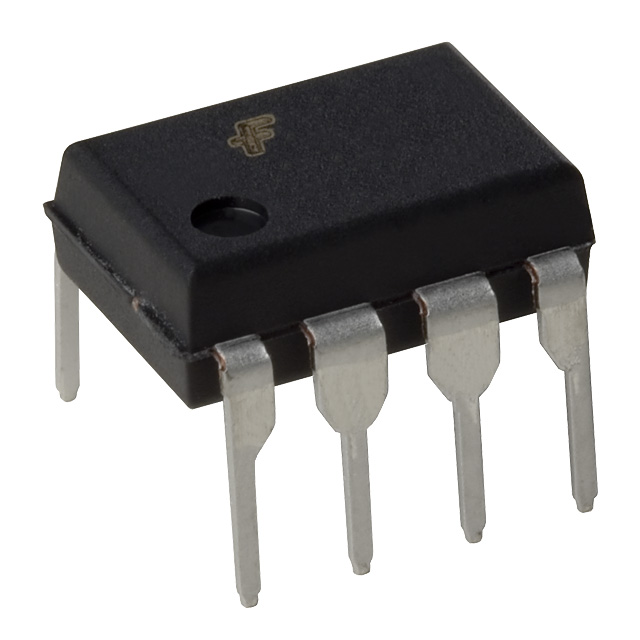 HCPL2601Sanyo Semiconductor/onsemiOPTOISO 2.5KV OPN COLLECTOR 8DIP
 -
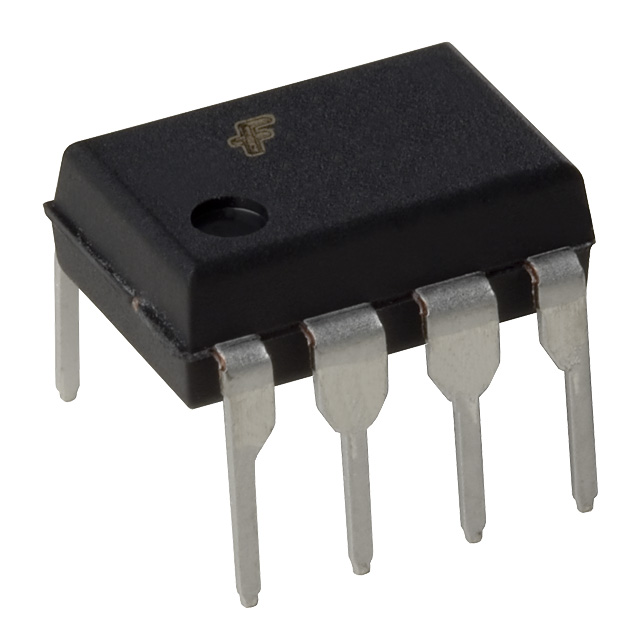 MCT6Sanyo Semiconductor/onsemiOPTOISOLATOR 5KV 2CH TRANS 8-DIP
 -
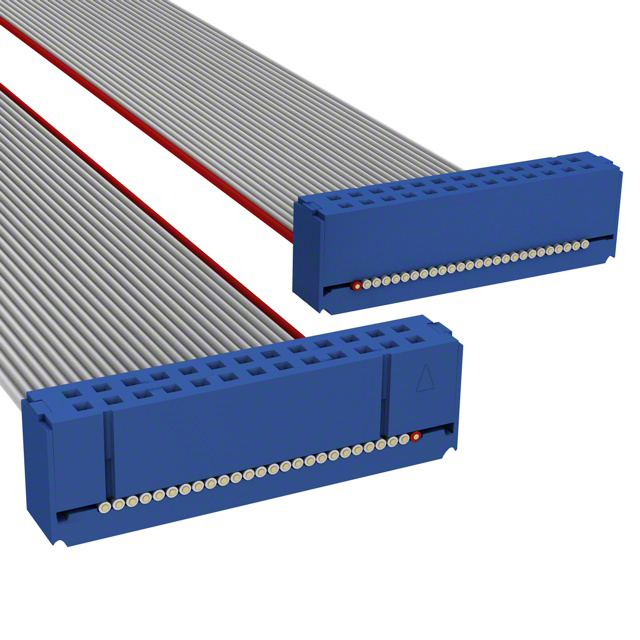 C3AAG-2636GCW IndustriesIDC CABLE - CSC26G/AE26G/CSC26G
 -
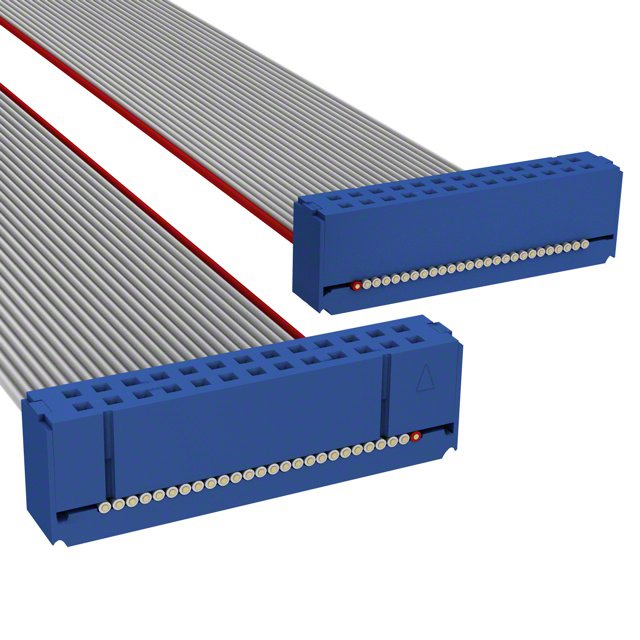 C3AAG-2618GCW IndustriesIDC CABLE - CSC26G/AE26G/CSC26G
 -
 C3EET-5036GCW IndustriesIDC CABLE - CCE50T/AE50G/CCE50T
 -
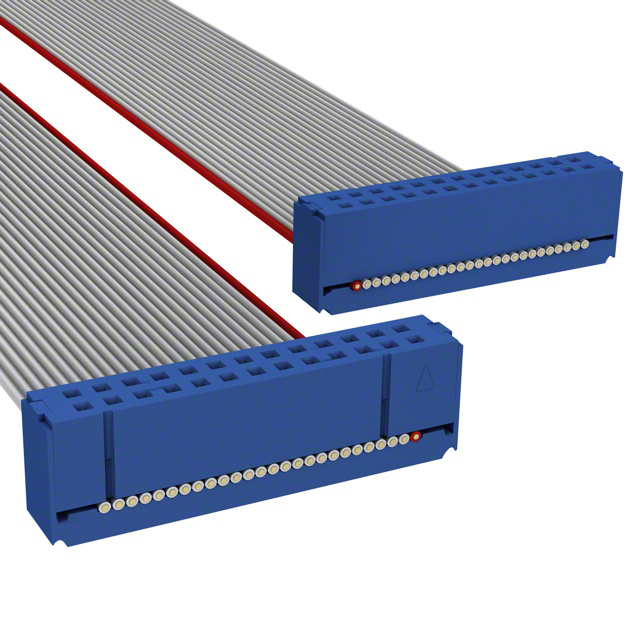 C3AAG-2606GCW IndustriesIDC CABLE - CSC26G/AE26G/CSC26G
 -
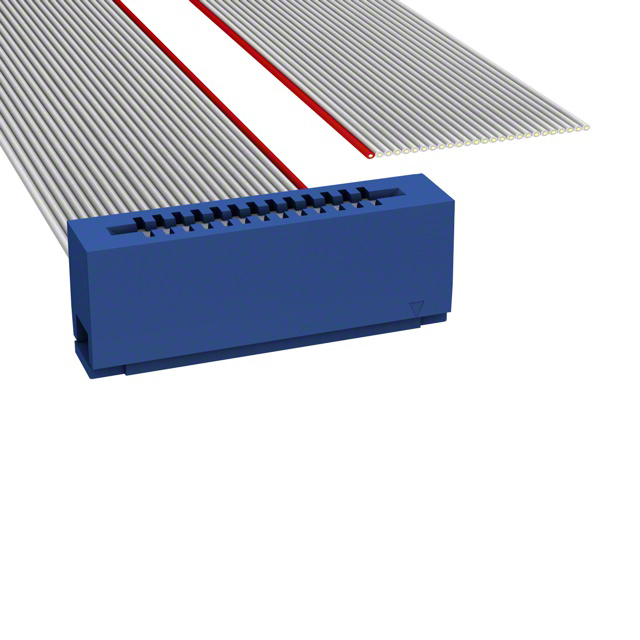 C1EXG-2636GCW IndustriesIDC CABLE - CCE26G/AE26G/X
 -
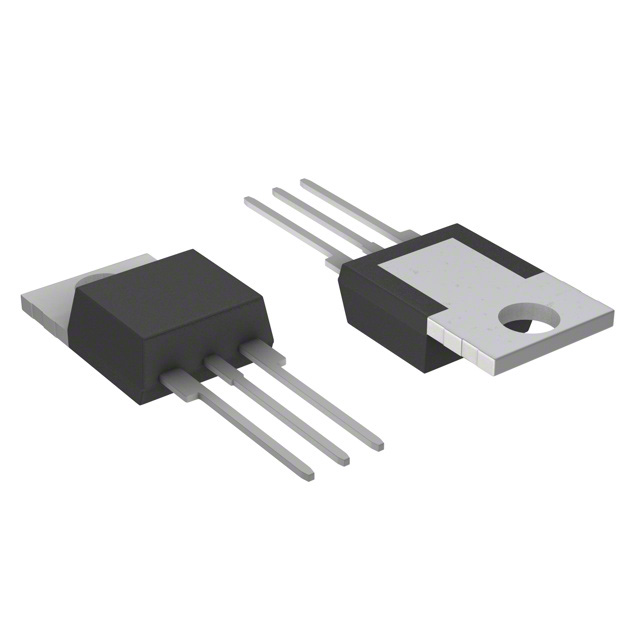 S6008LWickmann / LittelfuseSCR 600V 8A TO220
 -
 CFR-12JB-52-110RYAGEORES 110 OHM 5% 1/6W AXIAL
 -
 ECS-F1CE225KPanasonic Electronic ComponentsCAP TANT 2.2UF 20% 16V RADIAL




{{ boxName }} ({{ dataList?.length || 0 }} Items)
{{ val.manufacturer || val.en_manufacturer || '' }}
quantity: {{ val.quantity }}
it was empty.