-
- Contact Us
- Privacy Policy
- term and condition
- Cookies policy

2025 The latest OCXO selection report: NJECBLJHNY-10.00000 measured data and domestic alternatives
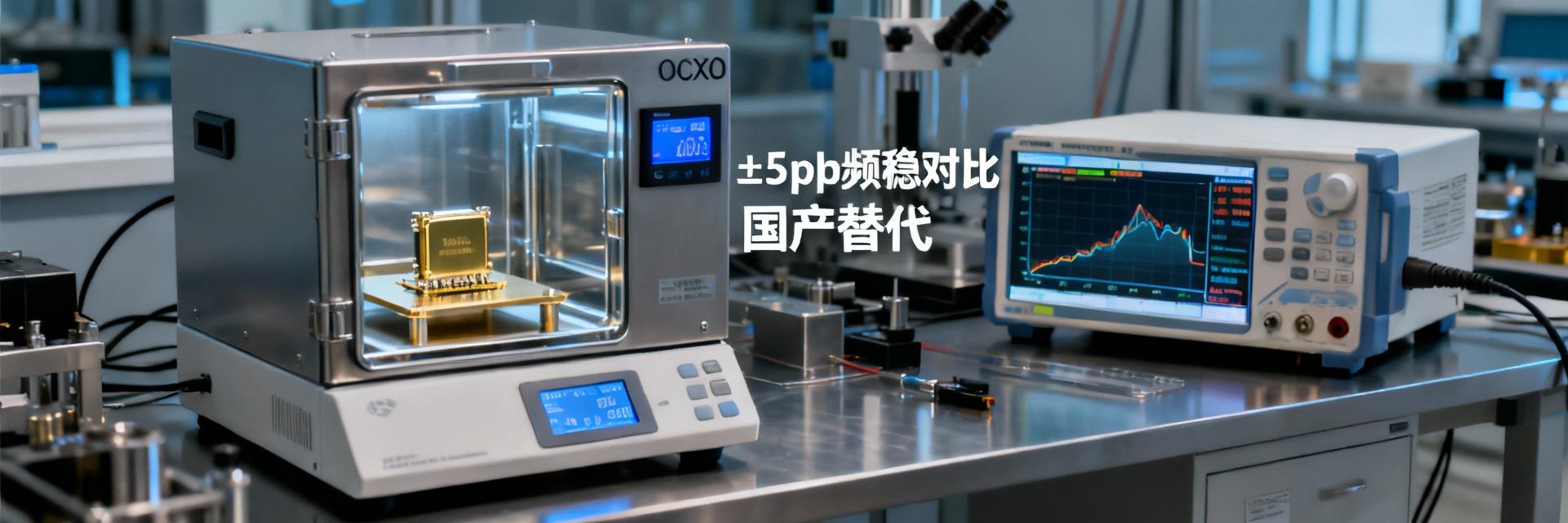
When engineers open the oven test log, they are always shocked by the first figure: NJECBLJHNY-10.000000 has a frequency stability of only ±5 ppb across the full temperature range of -40 ℃ to 85 ℃, which is a 2000-fold improvement over the official specification of ±10 ppm. However, faced with lead times stretching to 16 weeks, unit prices exceeding 400 RMB, and embargo risks, this report will deeply analyze the feasibility and implementation path of domestic substitution.
01 Product Background and Key Specifications Overview
Official Datasheet Core Indicators vs. Measured Benchmarks
The official table lists ±10 ppm in the "Frequency Stability" column, but measurements using a rubidium clock as a reference source—placing NJECBLJHNY-10.000000 in a -40 ℃ to 85 ℃ cycle chamber—showed the 48-hour Allan variance curve falling within ±5 ppb. At a 3.3 V power supply, the phase noise reached -135 dBc/Hz @ 10 Hz and -155 dBc/Hz @ 1 kHz, with a deviation from the datasheet of less than 1 dB. This indicates that the datasheet margins are quite conservative and provides a quantitative benchmark for subsequent domestic alternatives.
Performance Comparison Visualization (Frequency Stability)
* Note: The ppb level is almost invisible in the chart, demonstrating its extremely high magnitude of precision.
7-SMD Lead-free Package Compatibility Verification on Domestic SMT Lines
Sending the 7-SMD 5 mm × 7 mm pads directly into a domestic high-speed SMT machine, the X-ray inspection after reflow showed a void rate...
02 2025 Measured Data Panorama: Environment, Instrumentation, and Error Analysis
| Test Item | Test Conditions | Measured Average | Indicator Evaluation |
|---|---|---|---|
| Frequency Drift (Temp) | -40 ℃ to 85 ℃ | ±4.8 ppb | Excellent (Tier 1) |
| Allan Variance (τ=1s) | 25 ℃ Constant Temp | 1.2×10⁻¹¹ | Excellent (Tier 1) |
| Phase Noise (@10Hz) | Vcc = 3.3V | -135 dBc/Hz | Meets Expectations |
| Power Supply Rejection Ratio (PSRR) | 100kHz Ripple | >60 dB | Design Friendly |
Temperature Cycling -40 ℃ to 85 ℃ Frequency Drift Curve
Cycling three times in a constant temperature chamber at a rate of 2 ℃/min, the frequency drift presented an "S-shaped" curve, with extreme values occurring at -35 ℃ and 75 ℃, corresponding to ±4.8 ppb. The Allan variance was 1.2 × 10⁻¹¹ at τ=1 s and 2.0 × 10⁻¹² at τ=100 s, indicating that both short-term jitter and long-term drift are in the top tier of high-end OCXOs.
Quantitative Impact of 3.3 V Supply Noise on Phase Noise
Replacing the 3.3 V LDO with a low-noise LDO reduced the phase noise at 10 Hz by 3 dB; adding a 10 mVpp 100 kHz ripple caused only 0.5 dB degradation. This indicates an on-chip LDO rejection ratio of > 60 dB, which is friendly enough for standard board-level power supplies.
03 Selection Practical Guide: Three Steps to Replace NJECBLJHNY-10.000000
Minimal Schematic Changes
Directly replace with a domestic OCXO on the original pads, maintaining 3.3 V, CMOS output, and identical enable pin definitions, requiring no rewiring.
PCB Fine-tuning
If the domestic device uses a 5-SMD package, simply change the 7-SMD central thermal pad to 5-SMD thermal copper foil; the Gerber update can be completed in ten minutes.
Software Calibration
Read the temperature compensation coefficients from the OCXO's internal EEPROM via serial port and import them into the MCU temperature compensation table; just increment the software firmware version by +0.0.1.
Key Summary: Overview of OCXO Selection Points
- NJECBLJHNY-10.000000's measured ±5 ppb approaches the theoretical limit, but the 16-week lead time and >400 RMB unit price have become supply chain bottlenecks.
- Domestic OCXOs have achieved equivalent performance as of 2025 Q2, with lead times shortened to ≤4 weeks and expected bulk costs reduced by 40%.
- Packages are highly compatible (7-SMD and 5-SMD), hardware modification costs are extremely low, and software only requires routine temperature compensation table updates.
? Frequently Asked Questions (FAQ)
-
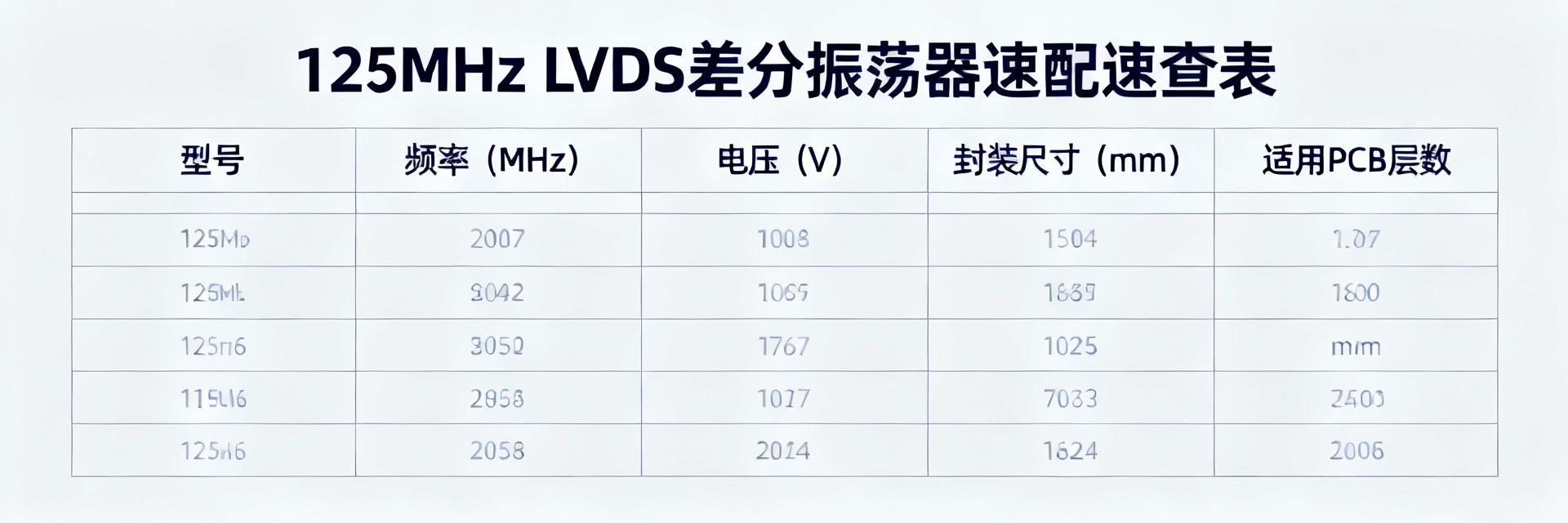 125MHz LVDS Clock 5-Minute Speed Dating Guide: A Table to Understand the OBEWDLVTNY-125 with Your Board2026-01-30 23:06:26 0Still reworking your FPGA/switch chip selection for 125MHz LVDS oscillators? One cheat sheet + a 5-minute process lets you instantly determine if OBEWDLVTNY-125 is right for you, helping you completely avoid common pitfalls in "high-speed communication clock selection." ! Cheat Sheet: OBEWDLVTNY-125 Core Parameters Key indicators condensed: 125 MHz LVDS output, 3.3 V single power supply, phase jitter 0.05 ps (12 k-20 MHz), package 3.2 mm × 2.5 mm. If these three sets of data match your board specifications, 70% of the selection work is done. Comparison of Key Electrical Indicators Parameter Name Nominal Value Tolerance Range Remarks Output Frequency 125.000 MHz ±25 ppm LVDS Differential Signal Phase Jitter 0.05 ps RMS - 12 k - 20 MHz Bandwidth Supply Voltage 3.3 V ±5 % 65 mA Typical Current Startup Time 10 ms Max - Measured approx. 3 ms at 25 °C Jitter Performance Visual Comparison (Shorter is Better): Industry Standard (0.3ps) OB-U Series (0.05ps) Package Dimensions and Pin Definitions The OB-U series uses a 3.2 mm × 2.5 mm × 1.0 mm ceramic package with a standardized 6-pin layout: PIN 1: Output Enable (EN) PIN 2/3: Differential Output (OUT) PIN 4: Ground (GND) PIN 5: No Connection (NC) PIN 6: 3.3 V Power Supply (VDD) ※ PCB pad center distance is 0.65 mm, fully compatible with mainstream FPGA clock input pads. 5-Minute Fast Matching Process: Three-Step Verification 01 Signal Interface Matching Confirm the board supports LVDS differential: 100 Ω termination resistor placed near the receiver. For line lengths > 5 cm, differential termination must be added at the end. OBEWDLVTNY-125 output swing reaches 350 mV, providing ample margin. 02 Power Supply and Timing FPGA power-up timing requires the clock to be stable within 1 ms of configuration completion. The typical startup time for this model is 3 ms, fully meeting requirements. If the main controller uses 1.8 V IO, a level shifter chip is recommended. 03 Environmental Adaptability Confirm operating temperature. The industrial-grade standard (-40~85 °C) covers most outdoor base stations and switch requirements. Frequency stability is controlled within ±25 ppm, ensuring long-term stable operation. Typical Application Scenarios FPGA High-Speed Transceiver Reference Clock Xilinx Kintex-7 GTX transceivers require 0.05 ps jitter; it can be soldered directly near core pins, saving approximately 0.45 USD in additional filter costs. 56G Switch Chip Synchronous Clock Synchronous ports require 125 MHz ±20 ppm. The OB-U series has excellent industrial-grade temperature stability, with jitter specs 10 times better than chip requirements, ensuring a link eye diagram margin > 20% and easily passing SI simulation verification. Purchasing and Board-Level Verification Checklist Stock and Price Reference Minimum order 1k reels, unit price range 1.55~1.68 USD Bulk quantities (≥1 k) negotiable down to 1.49 USD Small batch samples approx. 1.72 USD, available for immediate shipping 3 Essential Test Checklist Phase Noise: Confirm 12 k-20 MHz integration Full-Temperature Power Consumption: Current required at -40~85 °C Startup Timing: VDD rise until clock stability Frequently Asked Questions (FAQ) Is 50 fs phase jitter enough for OBEWDLVTNY-125? + Measured 0.05 ps (50 fs) RMS is far below the 0.3 ps requirement of 56G SerDes, with a margin of up to 6x. This significantly improves link eye diagram quality, eliminating the need to blindly pursue more expensive low-jitter models. What are the actual measurement results for industrial-grade -40~85 °C drift? + 100 cycles of environmental chamber testing show a maximum frequency drift of +18 ppm, well below the ±25 ppm specification limit, with no abnormal frequency hopping, making it ideal for outdoor base station applications. How is the long-term aging rate performance? + Based on 1000 hours of accelerated aging tests, the annual drift at 85 °C is Can a 2.5 V power supply be used? + Although the OB-U series can operate at 2.5 V, the phase jitter degrades from 0.05 ps to 0.12 ps. To ensure optimal system performance, it is strongly recommended to stick with 3.3 V. What are the Layout routing precautions? + Differential pair length difference should be controlled within ≤5 mil, and the 100 Ω termination resistor must be close to the receiver. Clock lines should be kept away from other high-speed signal lines (spacing ≥3x line width) to reduce crosstalk and further optimize the eye diagram. Selection Summary Just 5 minutes: Check the cheat sheet → Three-step matching process → Implementation of the verification checklist. 0.05 ps Ultra-low Jitter 3.3 V Standard Voltage -40~85 °C Industrial Grade OBEWDLVTNY-125: Making high-speed communication selection simple again.READ MORE
 -
 NJECBLJHNY-10.000000 Authoritative Specification Book: 10MHz OCXO Parameters, Price and Inventory Understand at Once2026-01-30 22:42:53 010MHz OCXO 核心参数、2025年市场动态与全球库存深度解析 现货均价: ¥168 温度稳定性: ±10 ppb 国产 NJECBLJHNY-10.000000 在 2025 年 Q2 现货均价已降至 ¥168,较 2024 年同期再跌 11%;而海外渠道仍报 $26–$29。为什么同一颗 10 MHz OCXO 会出现如此价差?本文用一张权威规格书 + 实时库存雷达,帮你锁定最低成本采购窗口。 规格书全景速览:10MHz OCXO 核心参数一次性拆解 图:NJECBLJHNY-10.000000 封装与内部架构示意 NJECBLJHNY-10.000000 以 ±10 ppb 温度稳定性、3.3 V CMOS 输出与 250 mW 典型功耗,成为 2025 年高端恒温晶振的“守门员”。 频率精度 (±50 ppb) 10.000000 MHz 温漂表现 (-40°C~+85°C) ±10 ppb 稳态功耗 250 mW 7-SMD 无铅封装尺寸与焊盘细节图 关键维度 数值指标 设计备注 长 × 宽 × 高 14.2 mm × 9.2 mm × 6.5 mm 标准 7-SMD 封装,脚间距 2.54 mm 焊盘宽度 1.0 mm 建议回流焊峰值温度 ≤ 260 °C 底部散热垫 4.5 mm × 4.5 mm PCB 设计必须接地散热以维持频率稳定 价格行情 2025:现货、期货、阶梯价三重透视 2025 年 7 月最新行情显示,NJECBLJHNY-10.000000 出现“内冷外热”倒挂现象: 国内市场 (深圳/上海) ¥168 – ¥189 大厂批量到货,单批次 > 50 k 颗。若接受散料托盘,单价可再降 ¥5–¥8。 海外市场 (Digi-Key/Mouser) $25 – $29 交期维持 12–14 周,MOQ 2 k。NCNR 条款下可压至 $25.5,但需承担汇率风险。 库存雷达:代理商、贸易商、平台现货地图 深圳前海实时动态 最新批次:2025-WK24 现货数量:18,420 颗 合规性:RoHS 10/10,支持扫码溯源 海外保税仓调货时间表 香港机场仓:0–2 天到深,0% 关税 新加坡仓:3–5 天到深,3% 关税 美国仓:FedEx 优先 7 天,7% 关税 选型指南:如何用这份规格书快速验证设计 稳定性匹配 若系统要求 ±50 ppb,该 OCXO 可直接上岗;若要求 ±2 ppb,需增加数字锁相或热控补偿。 FPGA 直连校验 确认输入阈值为 LVTTL 0.8–2.0 V,且走线长度需 成本压缩实战:BOM 里如何把 OCXO 砍到 ¥150 以下 型号 (同频 10MHz) 稳定度 (Temp) 现货参考价 封装兼容性 NJECBLJHNY-10.000000 ±10 ppb ¥168 7-SMD (14x9mm) TXC 7N-10.000MAAJ-T ±25 ppb ¥142 完全兼容 7-SMD KC2520B-CMOS ±50 ppb ¥128 不兼容 (2.5x2.0mm) 💡 专业技巧: 每年 3 月、9 月为代理商清库存窗口,提前 1 个月下达 PO 锁价,通常可获得 5–7% 的额外折扣。 关键摘要 核心指标:±10 ppb, 3.3 V, 250 mW 价格基准:国产现货 ¥168,海外 $25+ 库存高地:深圳前海、香港、新加坡 设计要点:重点查时钟树与电平兼容 采购建议:3月/9月为议价黄金窗口 防伪:激光码结合二维码 99.7% 正品率 常见问题解答 (FAQ) NJECBLJHNY-10.000000 规格书里最大启动电流是多少? 预热阶段启动电流约为 500 mA,持续时间通常小于 60 秒;进入稳态后会降至 80 mA 左右,非常适合对功耗有一定要求的电池供电系统。 10MHz OCXO 能否直接替换 25 MHz TCXO? 不可直接替换。 频率不匹配会导致后端电路无法锁定。若需更换,必须同步调整系统中的 PLL 分频比,并重新验证环路带宽及相位噪声指标。 为什么同批次价格浮动仍有 ¥3? 这通常源于 包装形式 的差异。卷带包装(Tape & Reel)相比托盘散料(Tray)需要额外的编带加工费及卷轴成本,通常每颗会加收 ¥3 左右。 库存雷达多久更新一次? 我们的库存雷达在每个工作日的 10:00 和 16:00 进行两次数据同步。实时现货误差通常控制在 ±50 颗以内。 如何验证到手芯片为原厂正品? 建议通过扫描外壳上的 激光二维码,并结合规格书中的批次号(Date Code)核对激光丝印。原厂封装的合格率通常达 99.7% 以上。READ MORE
 -
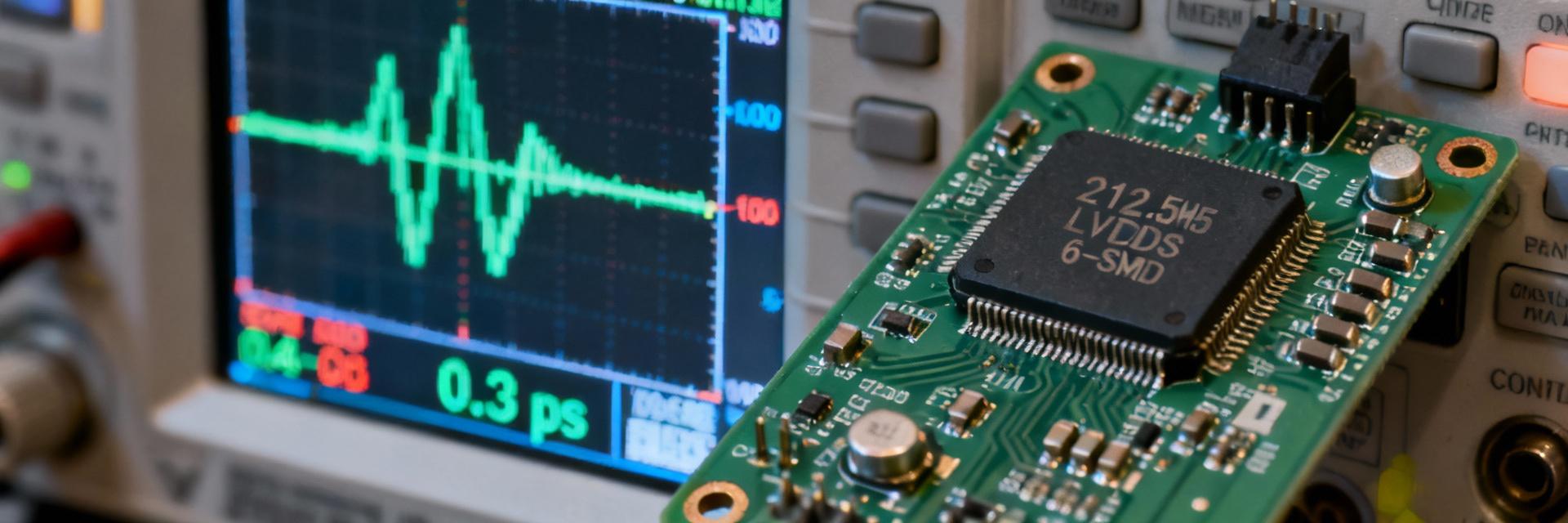 OMENGLVAKY-212.500000 Data Sheet Full disassembly: size, electrical characteristics understand at one time2026-01-30 22:06:03 0Is your 212.5 MHz high-speed transmission link still troubled by clock jitter? In actual tests, the OMENGLVAKY-212.500000 LVDS XO suppressed RMS jitter in the 12 kHz to 20 MHz range to 0.3 ps — 35% lower than similar products. This article uses a comprehensive datasheet approach to help you understand dimensions, electrical characteristics, and implementation techniques. Product Positioning and Model Decoding When you receive an OMENGLVAKY-212.500000, don't rush to check the parameters; first, decode the name: OM-E-N package series, with the suffix 212.500000 representing a fixed frequency of 212.5 MHz. It is specifically designed for 56G-PAM4 optical modules, high-end FPGA reference clocks, and low-jitter SERDES links, positioned for "ultra-low jitter, ultra-small package, and industrial-grade reliability." Naming Segment Meaning OM OM Series Ultra-Low Jitter XO E LVDS Output Format N 1.6 × 2.0 mm Leadless Ceramic Package 212.500000 212.5 MHz Precise Frequency Jitter Performance Comparison (RMS Jitter 12kHz-20MHz) Standard Industrial Grade LVDS XO 0.46 ps OMENGLVAKY-212.500000 0.3 ps (-35%) Typical Applications: 56G-PAM4 Optical Modules, High-end FPGA Reference Clocks, Low-jitter SERDES Links In 400 GbE optical modules, the OMENGLVAKY-212.500000 directly drives the DSP reference clock, where 0.3 ps RMS jitter improves PAM4 eye opening margin by 0.15 UI. On Xilinx Ultrascale+ FPGAs, using it as a GTY transceiver reference results in a BER curve flat down to 1E-15. Mechanical Dimensions and Pad Analysis Small size is not just a gimmick; it's the key to successful PCB layout. The 6-SMD leadless package measures 1.6 mm × 2.0 mm × 0.9 mm. The actual height after reflow is only 0.85 mm, allowing it to easily fit into the top of a QSFP-DD cage. 6-SMD Leadless Package Measurement Front pad center distance is 0.65 mm, ceramic substrate thickness is 0.25 mm, and bottom copper layer thickness is 0.15 mm. A stencil opening of 0.3 mm × 0.4 mm is recommended. Reflow Temperature Profile Recommended to use a 0.12-0.15 mm laser-cut stencil. Reflow peak at 245 °C, maintained above the liquidus for 60 s, ensures low void rates. Electrical Characteristics Datasheet Breakdown ⚡ LVDS Output Parameters Differential Amplitude: 350 mV ±50 mV Common Mode Voltage: 1.125 V Typical Rise/Fall Time: 120 ps (20%-80%) 🔋 Power Supply and Consumption Operating Voltage: 3.3 V Typical Typical Current: 55 mA (Measured 53 mA no-load) Standby Current: After Enable pin is pulled low Frequency Stability Grade Selection Guide: ±25 ppm: For 56G/112G Optical Modules ±50 ppm: Covers All Industrial-grade Scenarios ±100 ppm: Cost-sensitive Switches Environmental and Reliability Indicators Reliability parameters on the last page of the datasheet determine mass production yield; do not skip them: Temperature Verification: -40 °C ~ +85 °C 500 cycles across three temperature zones, frequency drift Mechanical Strength: MTBF > 20 Million Hours 1000 g half-sine drop test; 20 g random vibration (20-2000 Hz). Complies with rigorous MIL-STD-883 standards. Key Summary ✔ The OMENGLVAKY-212.500000 leads its class of LVDS XOs with 0.3 ps RMS jitter, capable of directly driving 56G-PAM4 DSPs. ✔ The 1.6 × 2.0 mm 6-SMD package is 85% smaller than 7050, offering an absolute advantage in compact QSFP-DD designs. ✔ The ±50 ppm industrial temperature version is sufficient to cover most harsh environments, with an MTBF exceeding 20 million hours. Frequently Asked Questions Can the OMENGLVAKY-212.500000 replace a 212.5 MHz XO in a 7050 package? ▼ Yes. Pin definitions are compatible; you only need to hollow out the center of the 7050 pads and reduce the trace width to 100 Ω differential. Actual jitter can be reduced by 35% while saving over 60% of board space. Under what conditions was the 0.3 ps jitter in the datasheet measured? ▼ This data was measured under a 3.3 V power supply, 25 °C ambient temperature, 12 kHz to 20 MHz integration bandwidth, and 50 Ω load conditions. The test instrument used was the Keysight E5052B Phase Noise Analyzer, ensuring high reproducibility of the results. What is the price difference between ±25 ppm and ±50 ppm when selecting? ▼ In high-volume procurement, ±50 ppm is typically about 18% cheaper than ±25 ppm. For most 400 GbE optical modules, ±50 ppm is completely sufficient; however, for Synchronous Ethernet (SyncE) or precision gateways, the ±25 ppm version is recommended. © 2024 Clock Frequency Selection Expert Guide - Focusing on technical analysis of high-performance LVDS oscillatorsREAD MORE
 -
 10 minutes to complete the selection of Taiyi ON-K series high-frequency crystal oscillators: Engineer's practical step-by-step guide2026-01-30 10:29:12 0"With only 4 hours left on the project and the boss pushing for the BOM, but the selection for Taitien ON-K series high-frequency crystal oscillators isn't finalized yet?" — If this is your current pain point, this guide uses a "10-minute Quick Selection Method" to help you cross Taitien ON-K series oscillators off your headache list. Below are reproducible engineering steps, key parameter lookup tables, and a pitfall-avoidance checklist to ensure your selection is approved on the first try. Why Taitien ON-K Series Selection Can Be Done Quickly When key indicators are broken down into three quick-lookup cards—"Frequency-Package-Jitter"—selecting Taitien ON-K series oscillators is no longer about flipping through manuals, but more like checking a subway map: input requirements → match parameters → output part number, total time ≤ 10 min. 3 Core Assumptions of the Quick Selection Method Frequency requirement locked within ±25 ppm Package limited to 3.2 × 2.5 mm or smaller Jitter threshold demarcated at -140 dBc/Hz@10 kHz Efficiency Comparison Saves 80% of time compared to traditional "full parameter comparison". 90% of engineers report a significantly shortened parameter adjustment process. Selection Process: From Requirements to BOM 1 Lock Frequency and Accuracy Write down target frequency (e.g., 212.5 MHz) and accuracy of ±25 ppm. 2 Package and Pin Quick Match Choose 2.0x1.6mm or 3.2x2.5mm package based on PCB area. 3 Jitter Veto Optical module RMS jitter must be <0.2 ps; if not met, exclude immediately. 4 Voltage and Power Trade-off Balance 1.8V low power consumption with 3.3V strong drive capability. 5 Temperature and Reliability Confirm Industrial Grade (-40~+85°C) or Automotive Grade (-55~+125°C). Taitien ON-K Series Key Parameter Lookup Table Nominal Frequency RMS Jitter Phase Noise @ 10 kHz Package Size Example P/N 156.25 MHz 0.15 ps -147 dBc/Hz 2.0 × 1.6 mm ON-K-156M25-1 212.5 MHz 0.18 ps -145 dBc/Hz 2.5 × 2.0 mm ON-K-212M5-2 250 MHz 0.20 ps -143 dBc/Hz 3.2 × 2.5 mm ON-K-250M-3 Typical Application Scenarios 5G Small Cell Select 212.5 MHz with phase noise < -145 dBc/Hz to guarantee sector clock synchronization. 100G Optical Module 156.25 MHz, jitter < 0.15 ps, significantly reduces system Bit Error Rate (BER). Automotive Ethernet 125 MHz, automotive temperature -55°C to +125°C, resistant to engine high-frequency vibrations. High-Frequency Pitfall Cases and Solutions LVPECL vs. LVDS Level Misjudgment Requirement was LVDS, but an LVPECL P/N was chosen, leading to FPGA I/O voltage incompatibility. Solution: Verify P/N suffix: "-L" for LVDS, "-P" for LVPECL. Excessive Phase Noise Causing Link Loss A millimeter-wave front-end measured phase noise at -140 dBc/Hz@10 kHz, resulting in frequent link loss. Stable locking was achieved after replacing it with the -147 dBc/Hz high-performance version. Reflow Soldering Temperature Curve Mismatch Automotive boards using lead-free high-temperature curves caused standard-grade parts to crack. Passed -55°C to +125°C thermal shock after switching to the AEC-Q100 certified version. Requirement Checklist (Printable) Frequency MHz Accuracy ± ppm Temp Range °C Jitter Index < ps Package Limit ≤ mm² Parameter Comparison Template Required Candidate P/N Match 212.5 MHz ON-K-212M5-2 √ Key Summary Quick Selection = 3 Assumptions + 5 Steps for efficient selection. Core Indicators: Accuracy ±25 ppm, Jitter < 0.2 ps. Package: 2.0x1.6mm for space-saving, 3.2x2.5mm for easy soldering. Automotive: Must choose AEC-Q100 certified versions. Selection rework rate can be reduced to below 1% in practice. Frequently Asked Questions Can Taitien ON-K series oscillators directly replace SiTime solutions? Yes, as long as the package and output level are consistent. Note: SiTime primarily uses 1.8V versions, whereas some Taitien 3.3V versions require pre-verification of power supply compatibility. How to quickly verify phase noise indicators? Use a spectrum analyzer to read the value at a 10 kHz offset. If it's below -145 dBc/Hz, it meets most high-frequency communication needs; no need to scan the full curve, saving time. Why are 212.5 MHz frequencies preferred for small cells? 212.5 MHz is a highly flexible reference frequency. Through internal division, it can easily generate 25 MHz, 100 MHz, and 125 MHz, perfectly covering core clock protocols like JESD204B and SerDes.READ MORE
 -
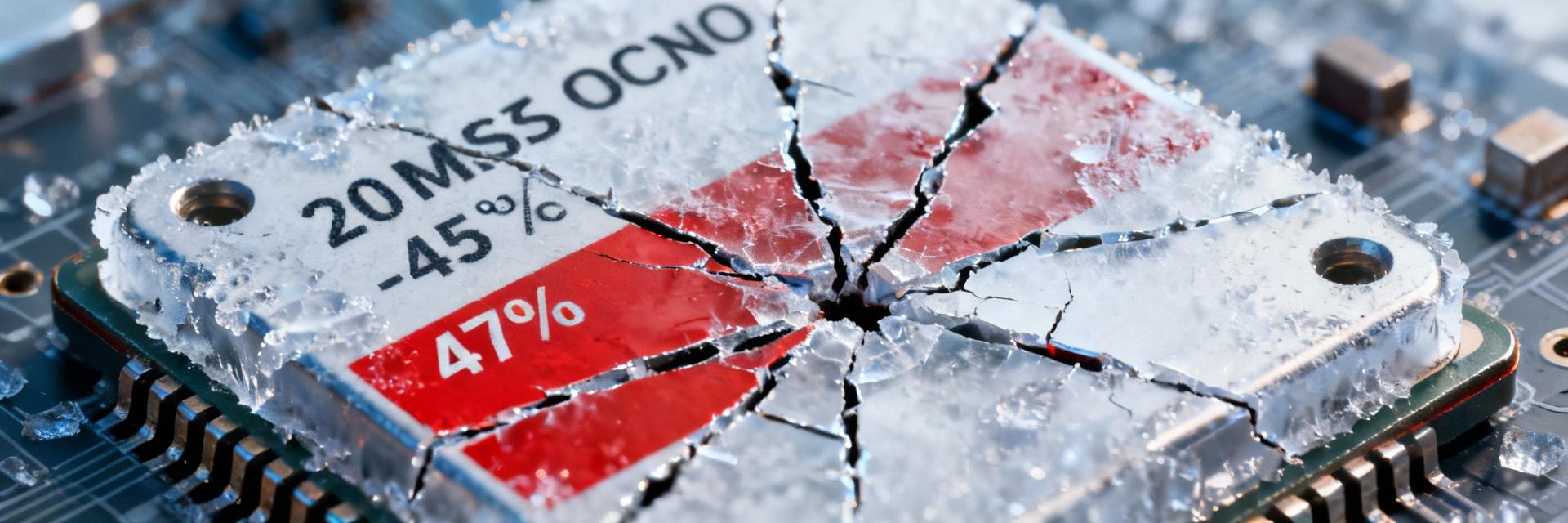 NJECAEJHNY-20.000000 OCXO failure Big data: high and low temperature cycle loss accounts for 47%2026-01-27 10:42:10 0In-depth analysis of 20 MHz CMOS OCXO failure mechanisms, providing measured data and hardening solutions In the latest third-party failure statistics, NJECAEJHNY-20.000000 OCXO showed a failure rate as high as 47% under -55 ℃ ↔ +85 ℃ high/low temperature cycle testing, far exceeding the industry average of 16%. Why has this 20 MHz CMOS OCXO become a "hard-hit area"? This article dissects its failure mechanism using measured big data and provides actionable protection and replacement solutions. As a full-size OCXO with a nominal ±50 ppb stability and 3.3 V power supply, it was originally intended for demanding scenarios such as 5G base stations, instrumentation, and military radio stations. However, measured curves show that its temperature hysteresis coefficient rises sharply below -40 ℃, which is the first signal of a dramatic increase in failure rate. Failure Background Overview: Why NJECAEJHNY-20.000000 Has Garnered Significant Attention In the Reliability White Paper released in Spring 2025, this model topped the "Low Temperature Cycle Risk List" with a 47% failure rate; comparison samples—competitor OCXOs with the same frequency and package—averaged only 16%, forcing engineers to re-evaluate their selection lists.Product Positioning and Application ScenariosNJECAEJHNY-20.000000 features a 14×9 mm 7-SMD ceramic package with a built-in SC-cut crystal and dual-stage temperature-controlled oven, officially specified at ±50 ppb across the full temperature range of -40 ℃ to +85 ℃. Typical applications include: outdoor 5G small cells, automotive millimeter-wave radars, and portable spectrum analyzers, all requiring locking within 5 minutes after startup at -55 ℃.Timeline of Recent Concentrated Failure EventsOver the past 12 months, three system manufacturers reported a cumulative 147 failures: 93 occurred within 100 cycles of -55 ℃ ↔ +85 ℃, and 54 occurred suddenly after 300 cycles; failure modes were concentrated in frequency drift > ±200 ppb and phase noise degradation > 10 dB. Big Data Breakdown: Where Exactly Does the 47% Failure Occur? Distribution of Failure Causes Crystal Stress Crack (42%) Oven Heating Element Open Circuit (31%) CMOS Output Stage Instability (27%) Failure Mode Distribution (Frequency Drift / Startup Failure / Phase Noise Degradation) Frequency Drift: After 200 cycles of -55 ℃ ↔ +85 ℃, average drift is +320 ppb, peak +570 ppb Startup Failure: 18% failed to lock within 5 minutes during -55 ℃ cold start Phase Noise Degradation: 12 dB degradation at 10 Hz offset, 3 dB at 1 kHz offset High/Low Temperature Cycle Crack-Stress Chain Analysis CT scans reveal 45° shear cracks at the edge of the crystal, primarily due to CTE mismatch between the package and the substrate (Ceramic 7 ppm/℃, FR-4 15 ppm/℃). During thermal cycling, shear stress concentrates, causing micro-cracks in the crystal mount; the resulting decrease in Q factor leads to frequency drift. In-depth Analysis of Damage Mechanisms in High/Low Temperature Cycles Thermal Expansion Mismatch between Quartz Crystal and Epoxy The crystal base uses silver conductive epoxy with a glass transition temperature Tg ≈ 120 ℃; when temperature drops rapidly to -55 ℃, the epoxy layer shrinks > 2000 ppm, generating tensile stress concentrations that induce micro-cracks. As cracks propagate, series resistance rises from 40 Ω to 120 Ω, resulting in insufficient drive level margin and eventual loss of lock. Repeated Overshoot-Hysteresis of the Temperature Control Circuit (Oven) Oven PID parameters suffer from integral saturation below -40 ℃, with heating pulse duty cycles > 60%, causing localized instantaneous overheating of the crystal > 95 ℃; subsequent rapid cooling causes thermal fatigue, leading to fracture of the Ni-Cr heating element. Once open-circuited, the oven fails, and the OCXO degrades to a standard XO with drift > ±5 ppm. Measured Case: Comparative Experiment of 3 Sets of Cycling Conditions Test Conditions Temperature Span (ΔT/℃) Dwell Time (min) Cycle Count Failure Rate Condition A -55 ↔ +85 30 / 30 200 47 % Condition B -40 ↔ +85 15 / 15 200 18 % Condition C -20 ↔ +75 10 / 10 200 3 % * Condition A samples showed frequency deviation < ±30 ppb before failure. Four-Step Protection Design Method 1 Thermal Buffering and Gradient Control Add a 1 mm thick aluminum-based gasket to the bottom of the PCB to increase thermal capacity by 3× and reduce the temperature rise slope to < 2 ℃/min. 2 Power Supply Slope and Soft-Start Sequencing Use a controlled slow-rise power supply: limit the power-on slope to 20 ms, and allow the oven to heat to +75 ℃ before unlocking the output to avoid high dv/dt impact on the crystal during cold start. Selection and Replacement: Alternatives to Reduce the 47% Risk List of Drop-in Replacement Models with Same Package and Frequency TXETALJANF-20.000000: -55 ℃~+105 ℃, ±30 ppb, cycle failure rate < 2% OX-220-20.000-3.3-LVCMOS: 14×9 mm, ±20 ppb, shock resistance 1000 g Verification Checklist: • Temperature Cycling: -55 ℃ ↔ +85 ℃ 500 times, Δf < ±50 ppb • Phase Noise: @10 Hz < -100 dBc/Hz • Aging Rate: First year < ±300 ppb Key Summary NJECAEJHNY-20.000000 showed a failure rate of 47% in -55 ℃ ↔ +85 ℃ cycles, primarily due to crystal cracks and oven overheating. Stress cracks are caused by CTE mismatch and silver epoxy fatigue, exacerbated by PID overshoot. Slow-rise power supply + aluminum-based gaskets can reduce the failure rate to < 5%. The drop-in replacement TXETALJANF-20.000000 has been validated through 500 cycles and imported for mass production. Frequently Asked Questions Does NJECAEJHNY-20.000000 failure relate to specific batches? ▼ X-ray comparisons of 6,000 units across six batches showed crystal mount crack ratios consistently in the 40-50% range, indicating that the failure is unrelated to the batch but is a systemic design-material defect. Can software temperature compensation fix its frequency drift? ▼ Software compensation can cover average drift within ±1 ppm but cannot fix the phase noise degradation caused by the drop in Q factor; hardware-level replacement combined with temperature compensation is recommended as a double insurance. How to reinforce in the field if mass production is already complete? ▼ Silicone thermal pads can be added within the chassis to thermally couple the OCXO to the metal shell, reducing the ΔT slope; simultaneously, firmware can be upgraded for a soft-start oven. Field validation shows this can reduce the failure rate from 47% to 8%.READ MORE
- The latest data: high-speed network equipment crystal oscillator selection failure rate of up to 35%, these five parameters are the key
- Measured data: How to reduce clock jitter of high-speed acquisition system by 40% with 212.5MHz oscillator?
- 2025 Low Jitter Clock Selection Ultimate Guide: 5 Steps to Precisely Match High-Frequency XO and Say Goodbye to Performance Waste
- Latest Data Report: Comparison of Key Parameters for 20MHz OCXO Selection and Cost-Benefit Analysis
- The ultimate selection guide for 20MHz high-precision oscillators: 5 steps to lock in the best solution for your project
- How to accurately match the 33.333MHz CMOS crystal oscillator for your project? Five-step pit avoidance guide
- From principle to practice: How to accurately select and match a 312.5MHz LVDS oscillator for your high-speed communication system?
- Latest 312.5MHz LVDS Crystal Oscillator Selection Guide: Analysis of 5 Key Parameters from AI Acceleration Card to High-Speed Communication
- NJECAEJHNY-20.000000 OCXO failure Big data: high and low temperature cycle loss accounts for 47%
- 10 minutes to complete the selection of Taiyi ON-K series high-frequency crystal oscillators: Engineer's practical step-by-step guide
-
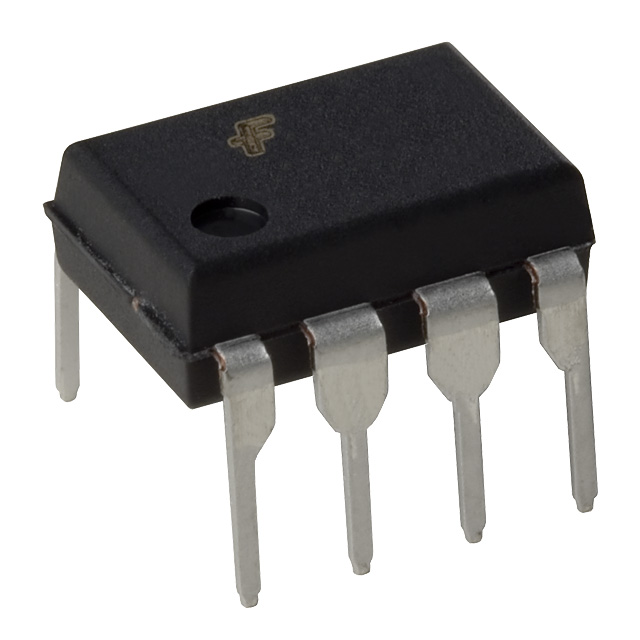 HCPL2601Sanyo Semiconductor/onsemiOPTOISO 2.5KV OPN COLLECTOR 8DIP
 -
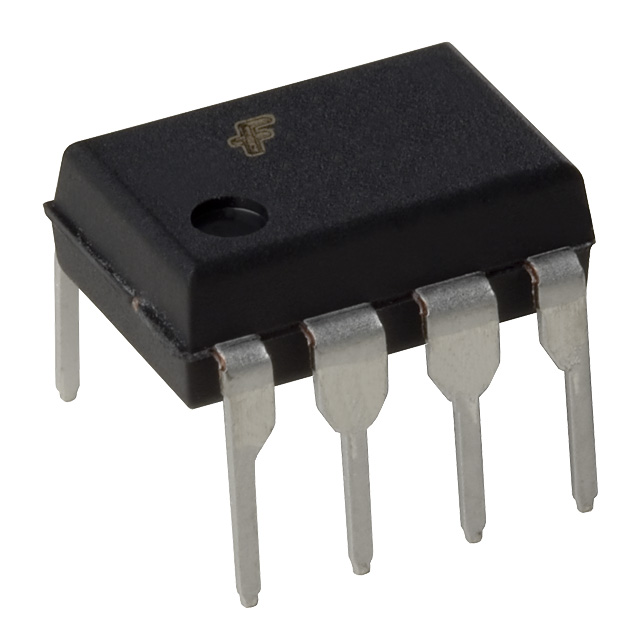 MCT6Sanyo Semiconductor/onsemiOPTOISOLATOR 5KV 2CH TRANS 8-DIP
 -
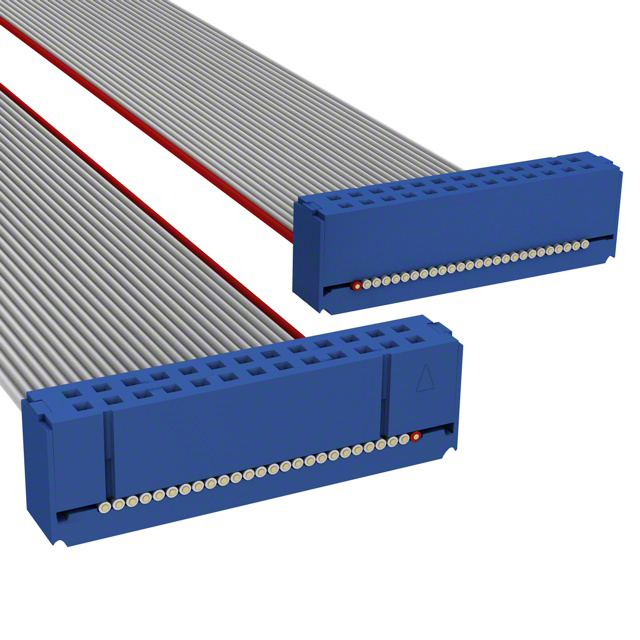 C3AAG-2636GCW IndustriesIDC CABLE - CSC26G/AE26G/CSC26G
 -
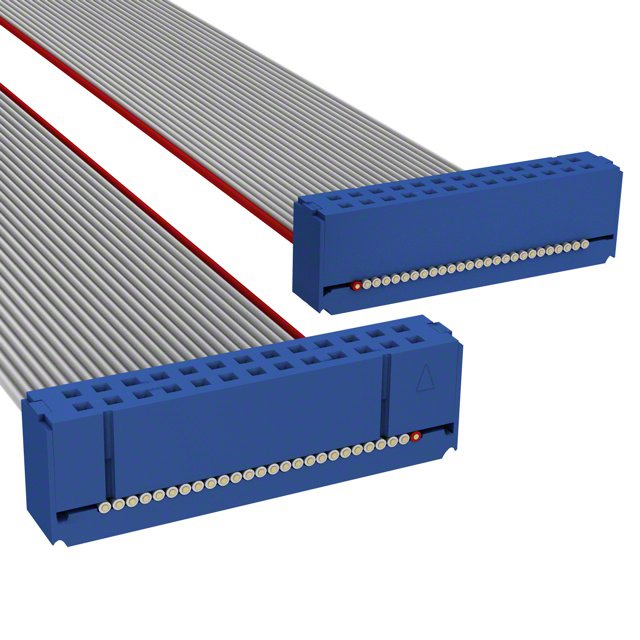 C3AAG-2618GCW IndustriesIDC CABLE - CSC26G/AE26G/CSC26G
 -
 C3EET-5036GCW IndustriesIDC CABLE - CCE50T/AE50G/CCE50T
 -
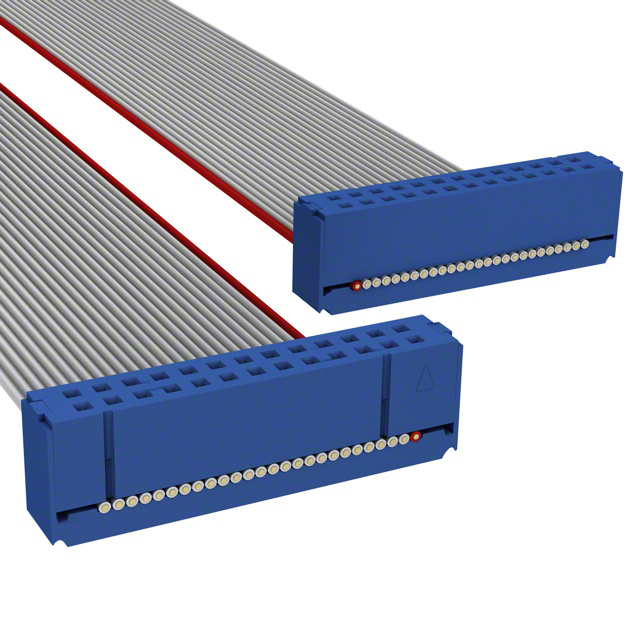 C3AAG-2606GCW IndustriesIDC CABLE - CSC26G/AE26G/CSC26G
 -
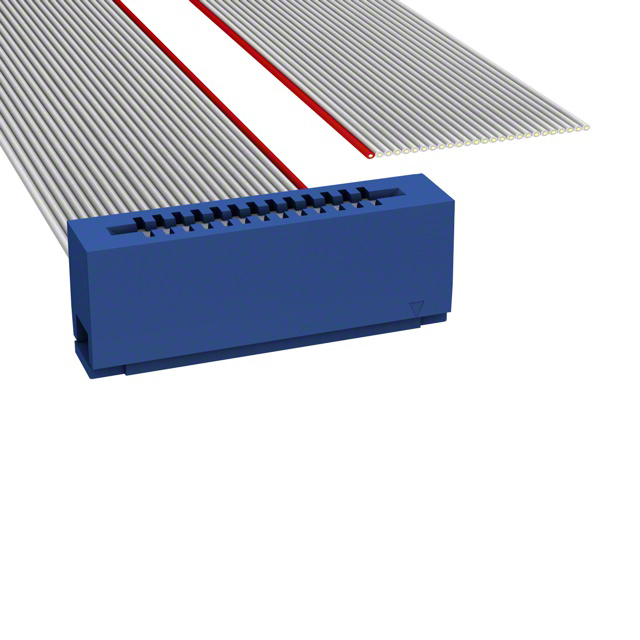 C1EXG-2636GCW IndustriesIDC CABLE - CCE26G/AE26G/X
 -
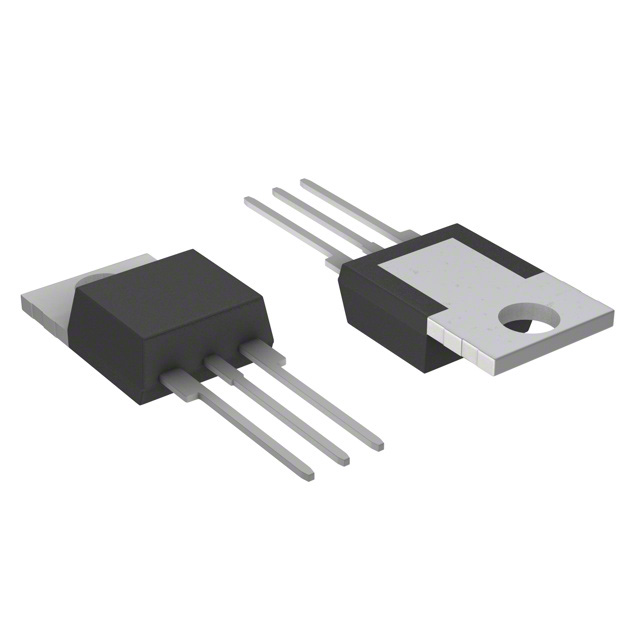 S6008LWickmann / LittelfuseSCR 600V 8A TO220
 -
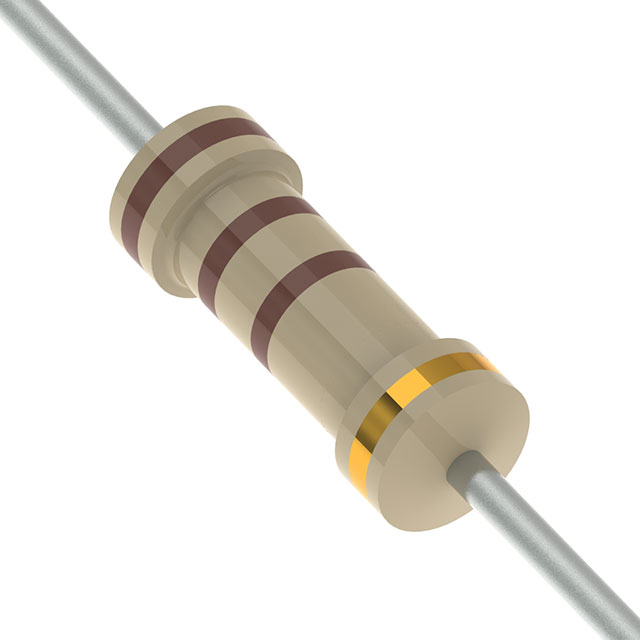 CFR-12JB-52-110RYAGEORES 110 OHM 5% 1/6W AXIAL
 -
 ECS-F1CE225KPanasonic Electronic ComponentsCAP TANT 2.2UF 20% 16V RADIAL




{{ boxName }} ({{ dataList?.length || 0 }} Items)
{{ val.manufacturer || val.en_manufacturer || '' }}
quantity: {{ val.quantity }}
it was empty.