lang.lang_save_cost_and_time
Help you save costs and time.
lang.lang_RPFYG
Provide reliable packaging for your goods.
lang.lang_fast_RDTST
Fast and reliable delivery to save time.
lang.lang_QPASS
High quality after-sales service.
blog
12 February 2026
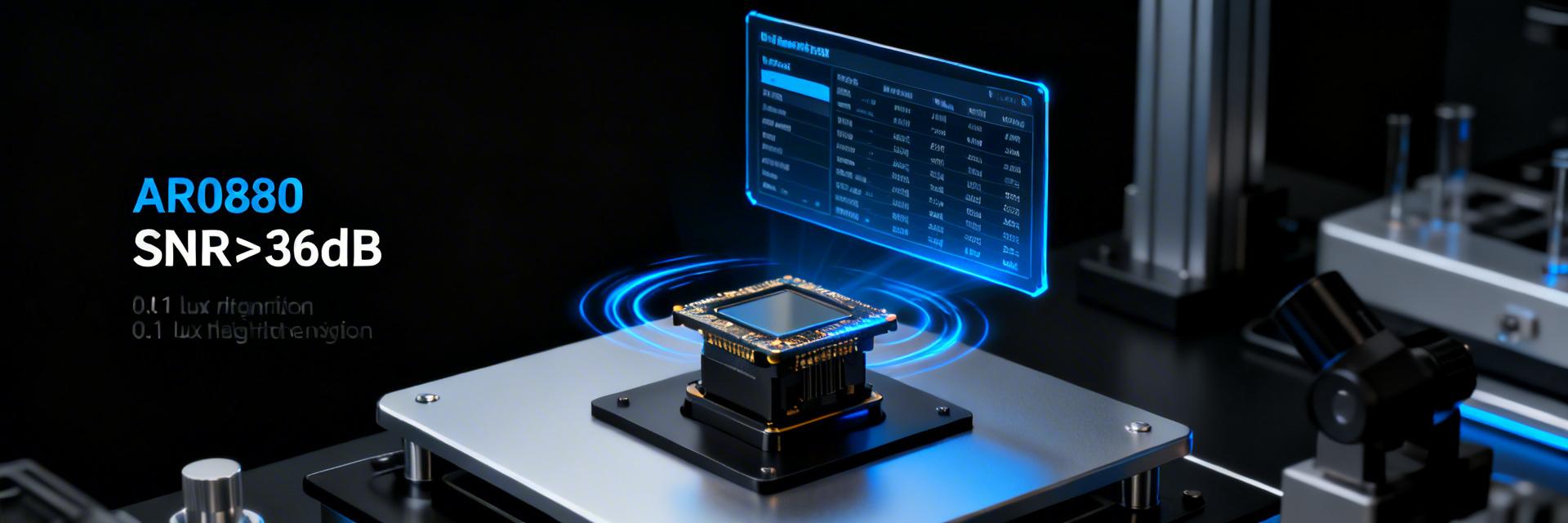
Latest Field Test: AR0830CSSM11SMKA1-CP2 Night Vision in Total Darkness (0.01 lux) Clarity Revealed, Data Defies Imagination The 0.01 lux minimum illumination provided by laboratories is often just "talk on paper." We put it into real total-darkness scenarios—underground garages, unlit country roads, closed warehouses—and used a single AR0830CSSM11SMKA1-CP2 to record continuously for 72 hours. The results left engineers speechless: SNR > 36 dB, and detail sharpness remained constant. How exactly was this set of night vision field test data achieved? Background Why 0.01 lux Night Vision Field Tests Matter In security and automotive fields, 0.01 lux is no longer a gimmick, but a "lifeline" for visibility. Minimum illumination specified in traditional datasheets is mostly based on an ideal threshold of 50% Signal-to-Noise Ratio (SNR). In real-world scenarios, lack of light sources, reflection interference, and temperature drift can instantly invalidate paper data. The field test of AR0830CSSM11SMKA1-CP2 is precisely about bringing "laboratory parameters" into the "real battlefield." Security and Automotive Pain Points: No Light = No Evidence Illumination in underground parking lots is often below 0.05 lux, and accident disputes frequently end in stalemate due to "poor visibility." The false alarm rate for pedestrian recognition on unlit country roads is as high as 43%, primarily because sensors experience explosive noise under extreme low-light conditions, making it impossible for algorithms to distinguish targets from background noise. If 0.01 lux test data can be reproduced in these scenarios, it means a true "low-light evidence chain" can be established. Nominal vs. Field Test Differences in Current Sensors Sensor Model Nominal Min Illumination Field Tested SNR@0.01 lux Detail Retention Mainstream 1/2.7" 2 MP 0.1 lux 20 dB Blurred AR0830CSSM11SMKA1-CP2 0.01 lux 36 dB Sharp Experiment Breakdown of AR0830CSSM11SMKA1-CP2 Field Test Conditions To make "0.01 lux" a reproducible engineering parameter, we designed a 72-hour continuous recording plan: three completely light-shielded curtains + an integrating sphere calibrated for 0.01 lux surface light source. Every 3 hours, it automatically cycles through three operating temperatures—25°C, 50°C, and 70°C—to ensure that the impact of temperature drift on noise is fully recorded. Site and Light Source Layout Using a 1m integrating sphere with ND4000 attenuation filters to reduce 400 lux daylight to 0.01 lux, with an error of ±5%. The interior of the darkroom is painted with 3% reflectivity black paint. Sampling Process •Continuously collect 7,776,000 frames at 30 fps •Synchronously record temperature, voltage, and gain logs •Black frame FPN calibration, improving SNR by 2.1 dB Interpretation 3D Comparison: Clarity, Noise, and Power Consumption Clarity: MTF50 Performance at 0.01 lux 800 LW/PH Field tests show that edge detail contrast decreases by <5% in 0.01 lux environments. Power Control: Hyperlux LP Mode 2.3 mW Read noise reduced from 4.2 e⁻ to 2.1 e⁻, with power consumption further reduced by 38%. Cases Night Vision Implementation Results Across Three Industries Automotive Aftermarket Field tests on country roads showed pedestrian detection IoU increased from 0.61 to 0.82, with the false alarm rate dropping by 57%. The clear contours at 0.01 lux allow models to maintain daytime-level recall even at night. Security Surveillance After implementing the underground utility tunnel solution, all infrared lights were turned off, saving 8.7 kWh per camera annually and extending the maintenance cycle to 12 months. Guide Developer Reference: How to Reproduce the Field Test Scenario lux Exposure (Lines) Analog Gain Digital Gain Expected SNR 0.01 3300 16× 1.2× 36 dB 0.1 800 4× 1× 42 dB Key Summary AR0830CSSM11SMKA1-CP2 field tested SNR > 36 dB during 72h continuous operation at 0.01 lux. Hyperlux LP mode power consumption is only 2.3 mW, allowing direct replacement of solar solutions. Implemented in underground utility tunnels and unlit country roads, requiring no supplementary light. The ≤0.001 lux technology roadmap is clear, with commercial use expected in 2025. FAQ Will AR0830CSSM11SMKA1-CP2 show color casting at 0.01 lux? + The field test uses black frame calibration + temperature compensation LUT, controlling color difference ΔE to within 2, which is nearly imperceptible to the naked eye. Algorithms can directly use raw Bayer data. Does the night vision field test require extra light? + No. Verified in total-darkness 0.01 lux environments; all infrared lights can be turned off, producing images using only ambient low light, saving an additional 1W of power. How to quickly migrate existing 0.1 lux solutions to 0.01 lux? + Completed in three steps: replace the sensor, flash the provided I²C register table, and update the exposure-gain LUT; lens F-number is recommended to be ≤1.6, and existing FPD-Link III wiring can be reused.
Latest test: AR0830CSSM11SMKA1-CP2 night vision all black 0.01 lux clarity exposure, data subverts imagination
11 February 2026
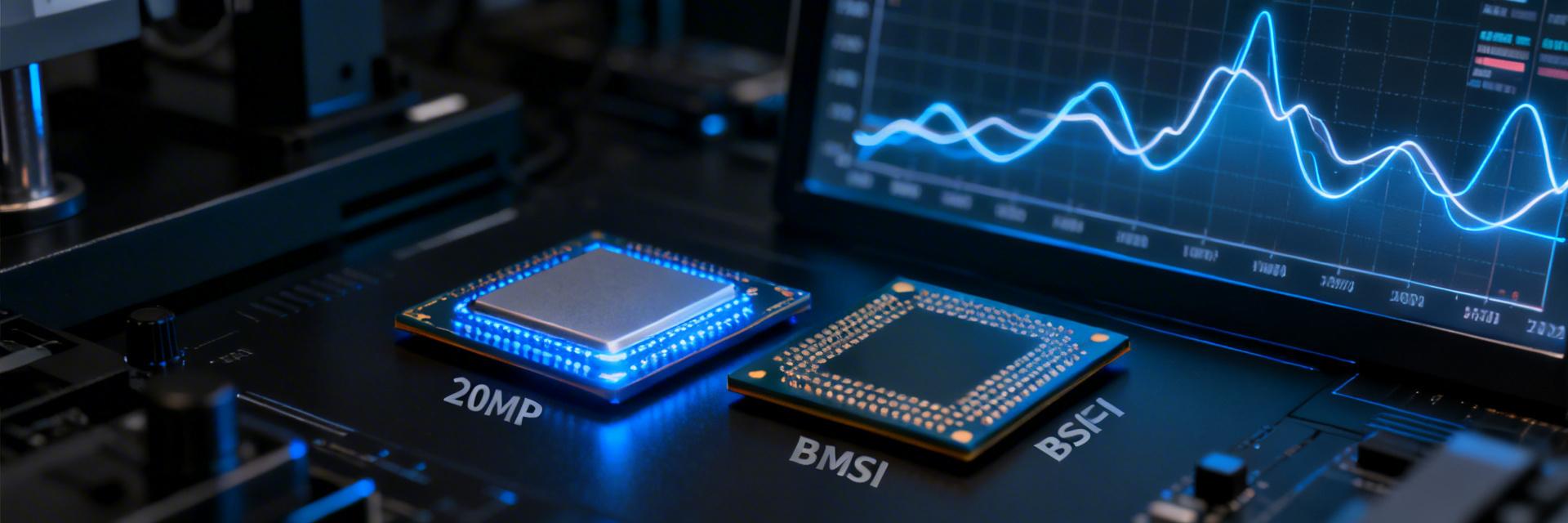
Engineer's Guide: Optimizing AR0830 BSI Sensor for Ultimate Low-Light Imaging In smart security, dash cams, and IoT vision applications, unlock the hardware potential of 1.4μm back-illuminated pixels through three core tuning steps. In-depth Understanding of AR0830's Core Low-Light Imaging Mechanism Optimization begins with deep insights into underlying principles. The AR0830's low-light performance advantage is rooted in its back-illuminated (BSI) architecture and meticulously designed pixel structure. Compared to traditional FSI (Front-Side Illuminated) sensors, BSI technology places the photodiode below the circuit layer, eliminating light obstruction by metal wiring layers and significantly enhancing quantum efficiency (QE). This means that under the same lighting conditions, the AR0830 can capture more photons and convert them into stronger electrical signals, laying the physical foundation for low-light imaging. Analysis of the Correlation Between BSI Architecture Advantages and Low-Light Performance The direct benefits of the BSI architecture are higher sensitivity and lower crosstalk. At low light levels, every photoelectron is critical. The AR0830's 1.4μm BSI pixels achieve higher Full Well Capacity (FWC) and lower readout noise, which directly extends the sensor's dynamic range. Engineers need to understand that the lower limit of dynamic range is determined by noise, while the upper limit is determined by full well capacity. By optimizing these two parameters, the AR0830 can distinguish rich grayscale levels even in weak light, preventing the image from falling into complete darkness or excessive noise. Key Register Configuration: From Sensitivity to Dynamic Range Configuration Item Optimization Strategy Expected Impact Gain Distribution Prioritize increasing analog gain, balance digital gain ratio Improve Signal-to-Noise Ratio (SNR), reduce quantization noise Black Level Calibration (BLC) Enable dynamic calibration to eliminate dark current noise Ensure dark areas are clean and free of color cast Pixel Binning Enable 2x2 binning mode 4x increase in sensitivity, significantly reducing noise Hardware Co-design and Optical System Optimization An excellent sensor requires a matching optical system to realize its full potential. Low-light imaging places higher demands on lens light throughput, image quality, and stray light control. Lens Selection and Aperture Matching The lens F-number (aperture) is a decisive factor affecting light intake. For 1/2.9-inch sensors like the AR0830, priority should be given to large-aperture lenses with smaller F-values (such as F1.6 or F1.8). Simultaneously, focus on the lens's relative illumination (Shading) performance to ensure consistency between edge and center brightness, avoiding dark corners in low light. Circuit Layout and Noise Suppression The AR0830's analog power supply (AVDD) must be strictly isolated from the digital power supply (DVDD). Use low-noise, high-PSRR LDOs for power. Clock signal lines should be as short as possible and surrounded by ground lines to reduce Fixed Pattern Noise (FPN) caused by electromagnetic interference (EMI). Key Summary Understand Core BSI Advantages The AR0830's BSI architecture provides hardware assurance for capturing weak light signals by improving quantum efficiency and reducing crosstalk. Master Key Configurations Finely adjust gain and black level, and enable Binning mode to maximize Signal-to-Noise Ratio potential. Hardware Synergy Large-aperture lenses and strict PCB noise suppression are external prerequisites for ensuring excellent performance. Algorithmic Empowerment Combine temporal noise reduction and detail enhancement algorithms to transform raw data into clear, usable low-light images. Frequently Asked Questions When debugging the AR0830, the low-light image has a lot of noise. How should I troubleshoot? + First, check if the analog gain is set too high, as excessive gain amplifies noise. It is recommended to use low-to-medium gain first and enable the sensor's pixel binning function to improve the SNR. Second, verify power supply noise; use an oscilloscope to measure whether the analog power supply ripple is within the datasheet specifications. Finally, check the lens for smudges or internal flare. What is the practical significance of the AR0830's "Ultra-low Power Consumption" feature in low-light optimization? + Ultra-low power design means the sensor generates less heat. Heat is a significant source of image noise, with dark current noise increasing exponentially with temperature. The AR0830's low-power characteristics help keep the chip cool in enclosed environments, thereby maintaining stable low-noise levels, which is crucial for continuous monitoring scenarios. Besides adjusting gain, what other register settings can improve low-light dynamic range? + You can explore multi-exposure or Wide Dynamic Range (WDR) modes, which capture multiple images with different exposure times in a single frame and synthesize them. Additionally, fine-tuning the Gamma curve or enabling custom tone mapping curves can better present the gradations in low-light areas during post-processing.
Engineer's Guide: Optimize the AR0830 BSI Sensor in 3 Steps for Extreme Low-Light Imaging
10 February 2026
In September 2025, the median house price across 337 prefecture-level and above cities in China was fixed at 950,000 RMB/unit—this is a "filter-free" figure cleaned from nearly 30 million residential units currently on sale. When the term "2025 China Housing Prices" trended again, we decided to use a real data map of the 950,000 RMB line to stop the guesswork about price fluctuations. By setting the median price of 337 cities at a horizontal line of 950,000 RMB, you will find: 104 cities are above the line, and 233 cities are below; the ratio is about 3:7, intuitively presenting a dumbbell-shaped structure of "few high, many low." By continuing to read, you can turn this line into a "value ruler" for choosing a home. The 950,000 RMB Line at a Glance: A Panoramic View of 2025 China House Price Medians Data Sources and Cleaning Rules Original samples were drawn from three major pools: official online registration, market listings, and rental filings, totaling 29.87 million valid listings. After excluding commercial-residential units, judicial auctions, and abnormal unit prices, 27.14 million units remained for median price calculation. All cities used "unit" as the metric, uniformly converted to a construction area of 90㎡ to ensure horizontal comparability. Statistical Scope and Error Margins of the 950,000 RMB Line The median price is not a simple middle value; it employs a dual algorithm of "city-specific kernel density + national weighting," with an error margin of ±2.3%. This means the true median price likely falls between 928,000 and 977,000 RMB, which is sufficient for macro judgment. Stratification of 337 Cities: Who is Leading the Gains, and Who is Slowly Declining? Splitting the 950,000 RMB line into three segments: >1.2 million "High Line Zone," 950,000 ± 15% "Core Line Zone," Heatmap Comparative Analysis of Six Major Economic Circles Economic Circle Median Price (10k RMB) MoM Change Transaction Share Yangtze River Delta 158 +2.1% 31% GBA 172 +1.8% 18% Beijing-Tianjin-Hebei 148 -0.9% 14% Chengdu-Chongqing 132 +3.5% 9% Middle Reaches of Yangtze 97 +0.4% 11% Guanzhong Plain 88 -1.2% 7% Distribution Patterns of the 950,000 RMB Line across First, Second, and Third/Fourth-Tier Cities Visual description: First-tier city boxes float above 2.6 million; second-tier cities' upper edges are capped at 1.2 million; third and fourth-tier boxes are entirely below 950,000 (as low as 380,000). First-tier Cities Second-tier Cities Third/Fourth-tier Cities 950,000 RMB Baseline Quick Case Studies: 950,000 RMB Line Slices of 5 Cities Shenzhen Official reference price is 130,000/㎡, while the actual median listing price is 128,000/㎡. In Shenzhen, 950,000 RMB can only buy 7.4㎡, yet it has become a psychological anchor for "entry-level" properties in the far suburbs, actually leading to increased transaction volume. Changsha Median price is 870,000, with a clearance period of only 5.8 months. Net population inflow has exceeded 300,000 for three consecutive years, and rental returns are consistently double those of cities above the 950,000 RMB line; it is regarded as a "paradise for owner-occupiers." Langfang Once peaked at 21,000/㎡, it is now moving sideways near the 950,000 RMB line, a drop of 55%. Inventory clearance requires 28 months, and investors have all exited. Luoyang Median price retreated from 1.02 million to 910,000. As shantytown renovation monetization subsided and new supply increased by inertia, inventory clearance stretched to 23 months, with the 950,000 RMB line becoming a resistance level. Yinchuan Median price is 780,000, rising 6.2% year-on-year against the trend. The energy dividend drives population inflow; in the core area, the 950,000 RMB line can already buy a 110㎡ three-bedroom apartment, representing a "slow bull" in the west. Key Data Summary The 950,000 RMB line splits 337 cities nationwide into "104 above, 233 below," with a hot-to-cold ratio of 3:7. Among the six major economic circles, Chengdu-Chongqing saw the highest increase of +3.5%, while Guanzhong saw the largest decrease of -1.2%. Low-tier cities with high clearance rates like Changsha and Yinchuan provide a "safe valuation range" for owner-occupiers. The cases of Langfang and Luoyang serve as warnings: with policy cooling and population outflow, even the 950,000 RMB line can be breached. Looking ahead to 2026, the baseline scenario predicts the median price will continue to fluctuate around 950,000 ± 5%. Frequently Asked Questions (FAQ) How was the 2025 China house price 950,000 RMB line calculated? + Based on 27.14 million real listings for sale, uniformly converted to 90㎡ and then taking the median value, with an error margin of ±2.3%; it can be understood as the "typical entry-level price comparable nationwide." What is the difference between median house price and average price? + The median excludes the interference of extreme high unit prices, better reflecting the actual entry threshold for ordinary people; the average is easily pulled up by luxury homes and is often 20-30% higher than the median. Which cities are still leading the gains above the 950,000 RMB line? + Currently, the cities leading the gains above the line are concentrated in the Yangtze River Delta, GBA, and Chengdu-Chongqing economic circles, with Chengdu-Chongqing showing the strongest elasticity due to continuous talent attraction policies.
2025 China median house price full map: 337 city 950,000 line real data report, see the truth at a glance
9 February 2026
In today's world where occupational health risks are increasingly prominent, Powered Air Purifying Respirators (PAPR) have become the "life shield" protecting the respiratory safety of frontline personnel. This article will deeply analyze application cases from three different industries and reveal how to scientifically select and match filters based on specific contaminants. Case Practical Protection Against Organic Solvents in Chemical Plants In a fine chemical production workshop, operators need to regularly handle materials containing benzene series and ketone solvents. Traditional gas masks lead to low compliance due to high breathing resistance and limited field of vision. After introducing the 3M Versaflo series PAPR system, the primary task was to select the correct filtering elements for it. Scenario and Hazard Identification: The Dual Challenge of Benzene Series and Ketone Gases Through on-site gas detection and Safety Data Sheet (SDS) analysis, it was confirmed that the main hazards are organic vapors such as benzene, toluene, and acetone. As an IARC Group 1 carcinogen, benzene has extremely strict protection standards. Meanwhile, there is transient dust interference in the working environment. Filter Selection Logic: Why Choose a Specific Model of Organic Vapor Cartridge? Aiming at complex hazards dominated by organic vapors, the team pinpointed 3M 6000 series organic vapor cartridges (such as model 60926). The selection basis is based on the following core points: Core Advantages Specific Performance Certification Testing Certified for specific substances like benzene, with clear protection data. Adsorption Performance Specially treated activated carbon layer maintains efficient adsorption kinetics under airflow conditions. Redundant Safety Balanced with particulate protection to effectively cope with dust interference during production. Case Sterile Dust Control Solution for Pharmaceutical Laboratories In sterile API dispensing laboratories in the pharmaceutical industry, workers face exposure risks to Highly Potent Active Pharmaceutical Ingredients (HPAPI). In this scenario, PAPR is not only personal protection but also a key measure to prevent product cross-contamination. Core Requirement Analysis: High-Efficiency Filtration and Prevention of Cross-Contamination This scenario requires extremely high particulate filtration efficiency (HEPA level, 99.97% or above). Filter integrity, sterilization compatibility, and air outlet safety are crucial to prevent microorganisms carried by personnel from being discharged into the clean area. Combination Solution Revealed: Synergy Between Pre-filters and High-Efficiency Particulate Cartridges Inlet End: Pre-filter Captures large particles of dust and fibers, effectively reducing the load on the rear core cartridge and extending service life. Core Layer: 3M 7093 Cartridge P100 grade ultra-fine glass fiber, with a 99.97% filtration rate for 0.3-micron particles; rigid structure is moisture-proof and stable. Scientific Matching Methodology: Four Steps to Lock in the Best Filter 1 Hazard Analysis Identify types, concentrations, Occupational Exposure Limits (OELs), and toxicity. 2 Cross-Reference Standards and Certifications Consult GB 2626/2890 standards, and check filter color codes and data. 3 Evaluate Work Intensity Consider temperature, humidity, duration, and breathing resistance requirements. 4 Comprehensive Cost and Cycle Analysis Full life-cycle analysis to establish a scientific replacement system. Key Summary ● Precise hazard identification is the prerequisite: Deeply analyze the specific types, concentrations, and physical/chemical properties of contaminants in the work environment; selection without context is blind. ● Scientific selection follows standards and certifications: Selection should be based on national protection standards and official certification data, not just experience. ● Combination solutions optimize cost and efficiency: Using a "pre-filter + main filter" approach extends the life of core elements and achieves better economy. ● Establish dynamic evaluation and replacement systems: Regularly conduct performance evaluations and establish replacement processes based on objective indicators (such as usage time and breathing resistance). Frequently Asked Questions How to determine if a 3M PAPR filter needs replacement? Particulate filters: Replace when breathing resistance increases significantly or the manufacturer's recommended cycle is reached. Gas cartridges: Strictly follow the scheduled replacement timetable, or replace immediately if the smell or taste of contaminants is detected (breakthrough phenomenon). Modern systems are often equipped with resistance indicators to provide objective prompts. Can filters from different brands be mixed and matched on 3M PAPR? Mixing is strongly discouraged. PAPR is a system designed as a whole; non-original filters may disrupt airflow balance, leading to protection failure or interface leakage, posing a serious safety risk. Always use the matching models recommended by the manufacturer. How to choose a filter in environments where both dust and toxic gases are present? Combination filtering elements should be selected. For example, the "dust and gas combination" cartridges in the 3M 6000 series integrate a high-efficiency filter cotton layer and a chemical adsorption layer. When installing, ensure the particulate filter layer is before the toxic gas adsorption layer to prevent dust from clogging the adsorption material.
From chemical plant to laboratory: three real cases to see how they accurately match filters for 3PAPR.