lang.lang_save_cost_and_time
Help you save costs and time.
lang.lang_RPFYG
Provide reliable packaging for your goods.
lang.lang_fast_RDTST
Fast and reliable delivery to save time.
lang.lang_QPASS
High quality after-sales service.
blog
26 January 2026
In today's pursuit of Gbps-level data transmission speeds, even minute jitters in system timing can lead to a sharp decline in communication link performance. Faced with a wide array of 312.5MHz LVDS oscillators on the market, engineers often fall into a selection dilemma: how to precisely identify the "heart" that ensures long-term stable operation of the system from a complex set of parameters? This article will break down the selection logic for you and provide a complete methodology from principle recognition to practical matching. Background Analysis: Why 312.5MHz LVDS Has Become the Golden Standard for High-Speed Communication? In the field of high-speed serial communication, the purity and stability of the clock signal are key factors in determining the link's bit error rate. The LVDS interface, with its characteristics of low power consumption, high noise immunity, and high speed, has become the preferred solution for backplane connections, high-speed SerDes, and internal clock distribution in optical modules. The specific frequency of 312.5MHz has become an industry-standard reference point for achieving precise clock synchronization and data recovery, as it maintains an integer multiple relationship with common high-speed serial protocol reference clock frequencies (such as PCIe, SATA, and Fiber Channel). Core Advantages of LVDS Interface Utilizing low-voltage differential signaling with a swing of approximately 350mV, it significantly reduces power consumption and EMI. Its differential nature provides excellent common-mode noise rejection, maintaining signal integrity in complex noise environments and supporting transmission rates of several Gbps. Industry Significance of 312.5MHz Frequency As the foundational frequency for 10Gbps optical modules, SerDes, and AI accelerator cards, it acts as the "commander" ensuring high-efficiency synchronous data exchange between multiple processing units, directly affecting the accuracy of the data stream. In-depth Interpretation of Key Parameters: Selection Dimensions Beyond the Datasheet Visual Analysis of Selection Parameter Weights (%) Phase Noise and Jitter (Phase Jitter) 95% Frequency Stability (Frequency Stability) 85% Power Supply Rejection Ratio (PSRR) 75% Phase Noise and Jitter Describes the purity of the signal in the frequency domain and its instability in the time domain. For high-speed systems, excessive jitter erodes the data valid window, leading to bit errors. Focus should be on noise values at 10kHz to 1MHz offsets. Frequency Stability and Total Frequency Tolerance Refers to the range of variation with temperature, voltage, and time. An excellent oscillator's total frequency tolerance should be controlled within ±20ppm to ensure the clock reference remains rock-solid in extreme environments. Power Supply Rejection Ratio (PSRR) Measures the immunity of the output to power supply noise. A high PSRR value means that even if the power supply environment is "unclean," the oscillator can output stably, which is crucial for applications near FPGAs. Practical Matching Guide: How to Seamlessly Integrate the Oscillator? PCB Layout and Routing Rules ●Maintain 100Ω differential impedance continuity. ●Keep traces short and straight; vias and sharp angles are strictly prohibited. ●Place close to the load and configure high-quality decoupling capacitors. Termination Matching Scheme Connect a 100Ω precision resistor across the receiver end to eliminate reflections at the end of the transmission line. The resistor must be placed close to the receiver pins to ensure absolute routing symmetry. Power Filter Design It is recommended to provide an independent, clean power rail. If power is shared, a π-type filter or magnetic beads must be used for isolation, ensuring the return path is short and low-impedance. Reliability Verification and Testing: Avoiding Potential Risks Test Item Test Purpose Key Focus Points Eye Diagram Test Evaluate overall signal quality Jitter, overshoot, eye opening Temperature Drift Test Verify environmental adaptability -40°C to +85°C frequency offset Phase Noise Analysis Frequency domain purity measurement dBc/Hz values at various frequency offsets Key Summary ✔ Core Frequency Value: The 312.5MHz LVDS oscillator is a universal reference for high-speed communication protocols, directly determining the system bit error rate. ✔ Selection Beyond Frequency: In-depth evaluation of phase noise, frequency stability (total frequency tolerance), and PSRR is required to ensure long-term reliability. ✔ Design Determines Performance: Impedance control, short and straight routing, and clean power filtering are essential conditions for achieving optimal performance. ✔ Testing Avoids Risks: Performance in real application environments is ensured through eye diagram, temperature drift, and reliability screening. Frequently Asked Questions (FAQ) When selecting a 312.5MHz LVDS oscillator, which is more important: phase noise or jitter? Both are essentially expressions of the same phenomenon in different domains (frequency domain and time domain). Phase noise provides detailed information about noise sources, aiding in diagnosis, while jitter directly corresponds to the system timing margin. Both the phase noise curve and various jitter parameters (such as period jitter) should be considered during selection to ensure the system timing budget is met. My system is power-sensitive; what is the typical power consumption of an LVDS oscillator? LVDS is a low-power design, and the operating current of a 312.5MHz oscillator is typically in the range of tens of milliamperes. It depends specifically on the process and driving strength. Please pay attention to the "Supply Current" parameter during selection. For extreme requirements, models with Standby or shutdown modes can be chosen. Why does my oscillator test well in the lab but show clock instability in the complete system? This usually stems from system integration issues. The most common is power supply noise interference (switching ripple from high-current circuits). The second is PCB layout issues, such as excessively long traces, impedance discontinuities, or proximity to noise sources. It is recommended to enhance power filtering, optimize layout to shorten traces, and check the integrity of the ground plane.
From principle to practice: How to accurately select and match a 312.5MHz LVDS oscillator for your high-speed communication system?
24 January 2026
In high-speed communication, precision measurement, or audio/video processing projects, a seemingly simple 33.333MHz CMOS crystal oscillator selection can become the "Achilles' heel" of system stability. Frequency deviation, startup failure, signal jitter... these hidden traps are enough to stall the progress of an entire project. This article provides a clear, actionable five-step method to help engineers accurately match this "heart of the system," ensuring the project stays on the right track from the very beginning. 1 Deeply Understand Requirements, Define Selection Boundaries The first step in selection is not to directly consult the parameter table, but to return to the project itself. You need to clearly define the role played by this 33.333MHz crystal oscillator and its performance boundaries. A clock source used for a Gigabit Ethernet PHY chip is significantly different in stringency compared to one used for an audio codec. Application Scenario and Performance Metric Breakdown First, clarify your application scenario. Is it used for synchronous data transmission (such as Ethernet, USB), or as a system clock for a microprocessor? The former has extremely high requirements for frequency accuracy and jitter, while the latter may focus more on long-term stability and cost. Key indicators include: initial frequency accuracy (e.g., ±10ppm), frequency stability over the operating temperature range, and the RMS value of phase jitter or period jitter. For example, high-speed SerDes interfaces typically require sub-picosecond jitter performance. Initial Screening of Key Electrical Parameters (Frequency, Voltage, Load) Three core points: 1) Nominal Frequency: Must be exactly 33.333MHz. 2) Supply Voltage: Typical voltages for CMOS output oscillators are 1.8V, 2.5V, 3.3V, etc., and must perfectly match the I/O voltage of the backend chip. 3) Load Capacitance: This is a key matching parameter for the CMOS output interface, requiring initial screening based on the chip's datasheet requirements. 2 Decrypting CMOS Output, Avoiding Interface Traps CMOS output provides rail-to-rail square wave output with strong driving capability, but it also brings features like steep edges and rich harmonics, posing specific requirements for circuit design. Output Type Advantages Challenges 33.333MHz Applicability CMOS Low cost, simple circuit, strong drive Higher EMI, edge overshoot Most mainstream choice LVDS Ultra-low power, strong anti-interference Requires termination matching, more pins Usually used for higher frequencies Clipped Sine Extremely low harmonics, good phase noise Weak drive, requires shaping Specific analog applications Matching Load Capacitance: Calculation and the Golden Rule of PCB Layout The total load capacitance in the circuit is composed of parasitic capacitance, input capacitance, and external capacitance. The formula is: CL ≈ CPCB + CIN + (C1 * C2)/(C1 + C2). The PCB layout must be compact, with traces as short and straight as possible to reduce the uncertainty of CPCB. 3 Analyzing Stability and Accuracy, Locking in Core Parameters Frequency Stability Visualization (±ppm) Industrial Grade (±10ppm)Highest Accuracy General Purpose (±30ppm)Balanced Performance Consumer Grade (±50ppm)Cost Priority Frequency stability refers to the maximum deviation of frequency within the operating temperature range. For example, a ±20ppm oscillator at 33.333MHz has a maximum deviation of ±666.66Hz. Aging rate is key to long-term reliability; the first-year aging of a high-quality oscillator is typically between ±1ppm and ±3ppm. 4 Practical Pitfall Guide—Five Common Traps and Countermeasures Trap 1: Startup Failure or Slow Startup Countermeasure: Check if the feedback resistor is in the megohm range; ensure load capacitance matches; verify power supply rise time to avoid slow ramping. Trap 2: Excessive Clock Jitter Affecting High-Speed Interfaces Countermeasure: Select Low Jitter models; optimize power supply decoupling (0.1μF + 0.01μF in parallel); keep clock traces away from noise sources. Trap 3: Excessive EMI and Signal Integrity Issues Countermeasure: Connect a small resistor (22Ω-100Ω) in series at the output to slow down edge speed; ensure a complete ground plane underneath. Trap 4: Over-Sensitivity to Power Supply Noise Countermeasure: Provide an independent LC or RC filter network; use an LDO rather than a switching power supply to power the oscillator. Trap 5: Ignoring Mechanical Stress from Packaging and Soldering Countermeasure: Strictly follow Land Pattern recommendations; avoid placing vias directly under the oscillator to reduce the risk of thermal stress damage. 5 Test Verification and Supply Chain Assurance Sample testing is the final gate for validating selection. Use high-impedance probes to measure the clock waveform and observe rise/fall times. For high-speed applications, evaluate jitter through eye diagrams and check for spurs using a spectrum analyzer. Choose reputable suppliers and clarify consistency requirements for full-temperature range testing before bulk purchasing. Key Summary Requirements First Precise matching begins with a clear definition of scenarios, accuracy, jitter, and voltage load. Interface Matching Understand CMOS characteristics, accurately calculate load capacitance, and optimize PCB layout. Long-term Stability Evaluate stability across the full temperature range and aging rates to ensure high-reliability applications. Verification Loop Lock in quality suppliers and guarantee mass production through eye diagram and spectrum analysis measurements. Frequently Asked Questions How to quickly determine if a 33.333MHz CMOS oscillator matches my MCU? Check three basic parameters: first, the supply voltage must be identical; second, confirm the MCU requires CMOS levels and level thresholds; third, calculate the required load capacitance value based on the manual's recommended load circuit and compare it with the oscillator's nominal value. It is recommended to perform full-temperature testing in the actual circuit. Why do I see many glitches on my 33.333MHz clock signal on the oscilloscope? This usually stems from power supply noise or improper measurement. Check if decoupling capacitors are placed close to the pins and use a grounding spring instead of a long ground wire during measurement. If the problem persists, try connecting a resistor of about 33Ω in series at the output to damp overshoot and ringing. In cost-sensitive projects, what aspects of choosing a CMOS oscillator can be simplified? Non-critical parameters can be relaxed, such as choosing ±50ppm stability, a 0-70°C temperature range, and universal packaging. However, core functional parameters such as power supply voltage matching and load capacitance cannot be compromised. At the same time, avoid products from unknown sources to maintain basic reliability. @keyframes grow { from { width: 0; } } @keyframes fadeInDown { from { opacity: 0; transform: translateY(-20px); } to { opacity: 1; transform: translateY(0); } }
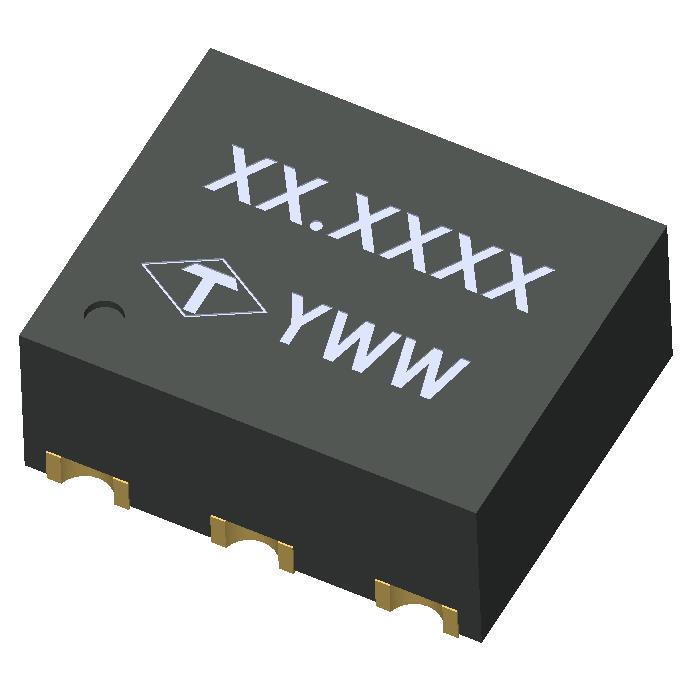
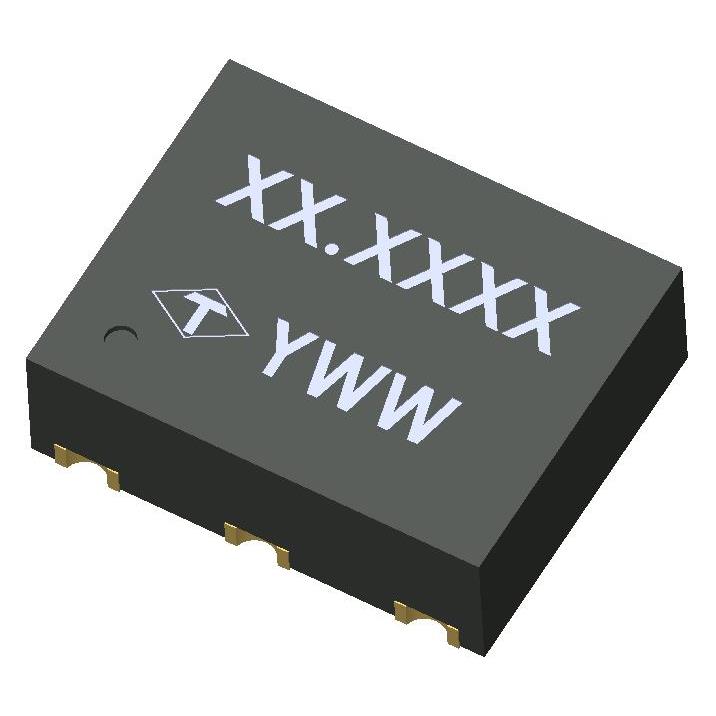
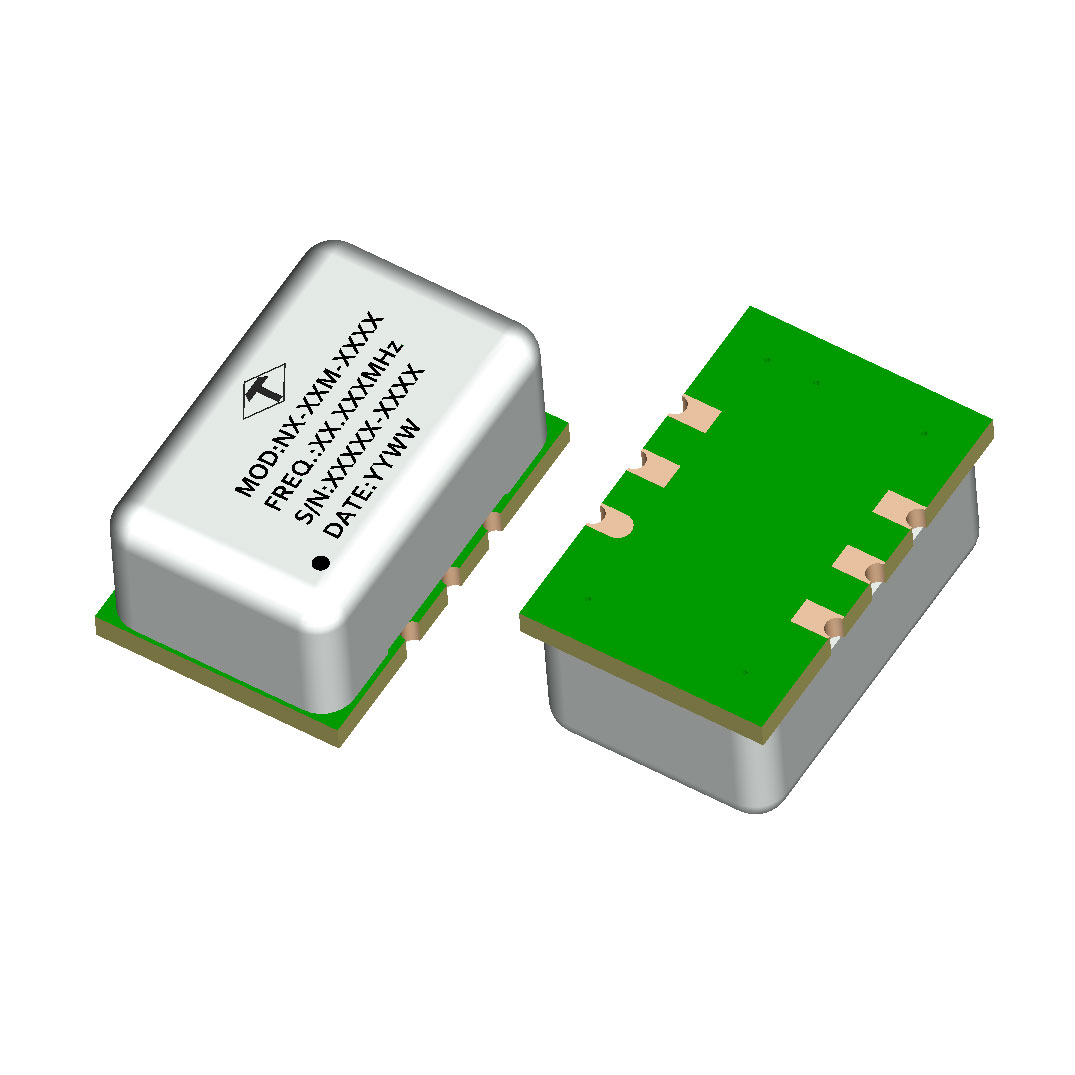
How to accurately match the 33.333MHz CMOS crystal oscillator for your project? Five-step pit avoidance guide
23 January 2026
In critical projects such as high-speed communication, precision measurement, and industrial control, a stable and reliable 20MHz high-precision oscillator is often the "heart" of a successful system. This guide will simplify the complex, helping you ensure your design wins on stability right from the start. Define Core Performance Indicators—Accuracy, Stability, and Noise The first step in selecting an oscillator is to thoroughly understand and quantify the core requirements of the project. This involves more than just looking at a frequency number; it requires a deep evaluation of its performance in a real-world operating environment. Frequency Accuracy and Temperature Stability Frequency accuracy refers to the initial deviation of the output frequency from the nominal value (20MHz). Temperature stability describes the extent to which the frequency drifts as ambient temperature changes. For example, a Temperature Compensated Crystal Oscillator (TCXO) with ±0.5ppm can still keep frequency variation within ±10Hz under extreme conditions. Phase Noise and Jitter Phase noise describes the short-term instability of a signal in the frequency domain. For 5G base stations or radar, excessive phase noise can lead to an increased Bit Error Rate (BER). At the 20MHz frequency point, special attention should be paid to phase noise values at offsets from 10Hz to 10kHz, which are the cornerstones of signal integrity. Stability Comparison of Common 20MHz Oscillator Technology Paths (ppm) Standard Crystal Oscillator (XO) ±50 ppm Temperature Compensated Crystal Oscillator (TCXO) ±0.5 ppm Oven Controlled Crystal Oscillator (OCXO) ±0.01 ppm Decoding Key Electrical and Physical Parameters Performance indicators need to be realized through specific electrical and physical parameters. Understanding these parameters is a prerequisite for matching them with your circuit design. Key Parameter Category Typical Value/Specification Design Impact Supply Voltage 1.8V, 2.5V, 3.3V, 5V Must be compatible with system power rails Output Logic CMOS, LVDS, HCSL, Clipped Sine Wave Determines impedance matching and signal integrity Package Size 7050, 5032, 3225, 2520, 2016 Limited by PCB space and integration requirements Operating Temperature Range -40°C to +85°C / +105°C Determines reliability in industrial or harsh environments Key Summary ● Core Indicators First: Selection begins with clarifying frequency accuracy, temperature stability, and phase noise requirements. These are the foundations for evaluating 20MHz oscillator performance and directly determine system timing references and signal quality. ● Parameter Matching Design: Carefully verify whether electrical and physical parameters such as supply voltage, output level, and package size are compatible with existing PCB designs and system power budgets to avoid integration obstacles. ● Technology Path Trade-offs: For general scenarios, cost-effective Temperature Compensated Crystal Oscillators (TCXO) can be chosen; for extreme stability, consider Oven Controlled Crystal Oscillators (OCXO). Decisions should be based on the project's balance between performance, cost, and size. ● Scenario-based Verification: The final selection must involve prototype testing combined with specific application scenarios (such as phase noise requirements for 5G communication or vibration resistance in industrial environments), along with managing supply chain risks to ensure long-term stable supply. Frequently Asked Questions How do I choose a 20MHz oscillator for my communication module? + For communication modules, primary focus should be on phase noise and long-term aging rates. It is recommended to choose a TCXO with excellent phase noise performance and set clear specifications at critical offsets (such as 1kHz and 10kHz). Additionally, evaluate its frequency stability under high and low-temperature cycling to ensure reliable connections in all-weather environments. In terms of packaging, miniaturized surface-mount packages are the mainstream choice. What is the difference between "accuracy" and "stability" in high-precision oscillators? + Accuracy usually refers to the initial frequency deviation at 25°C room temperature, which is the factory calibration value. Stability refers to the ability to maintain a constant frequency under the influence of factors such as temperature changes, voltage fluctuations, or aging over time. A high-precision oscillator may have a small initial error, but if its stability is poor, the frequency may drift during actual operation. For applications with significant environmental changes, stability is often more critical than initial accuracy. How can I balance oscillator performance and cost when the budget is limited? + First, define the project's "performance baseline." Then compare models that meet this baseline; you might need to compromise on package size, start-up time, or phase noise at non-critical offsets. Consider models with mainstream packaging and standard parameters, as they typically have higher production volumes and lower costs. Avoid paying for extreme performance that is not required. summary::marker { content: ""; } summary::-webkit-details-marker { display: none; } @keyframes fadeIn { from { opacity: 0; transform: translateY(20px); } to { opacity: 1; transform: translateY(0); } }
The ultimate selection guide for 20MHz high-precision oscillators: 5 steps to lock in the best solution for your project
22 January 2026
In high-end application fields such as 5G communications, satellite navigation, and precision instrumentation, the 20MHz Oven Controlled Crystal Oscillator (OCXO) has become the "heart" of system design due to its exceptional frequency stability and low phase noise. However, faced with a wide array of models on the market, how can engineers find the optimal balance between performance, reliability, and cost? Based on the latest industry data, this report provides an in-depth interpretation of the core parameters for 20MHz OCXO selection and offers a scientific cost-benefit evaluation framework. Market Background: Why is Demand for 20MHz OCXO Continuing to Grow? As 5G networks evolve toward higher frequency bands and denser networking, and with the global deployment of low-earth orbit (LEO) satellite constellations, the demand for high-precision, high-stability clock sources is experiencing explosive growth. As a fundamental reference frequency, 20MHz OCXO products have become a key cornerstone supporting the stable operation of these cutting-edge technologies thanks to their superior performance. Driving Analysis of Core Application Scenarios (5G Base Stations, Satellite Timing, etc.) In 5G base stations, OCXOs provide precise clock synchronization for radio frequency units and baseband processing units, with their frequency stability directly impacting network coverage and signal quality. For satellite timing systems, OCXOs must operate stably over long periods in ground stations and onboard equipment to provide nanosecond-level time accuracy, placing stringent requirements on the long-term aging rate and temperature stability of the devices. Technology Iteration Trends: From "Good Enough" to "Extreme Stability" Early applications might have been satisfied with ±50ppb stability, but current high-end applications have raised the standard to ±1ppb or even higher. This shift from "meeting basic functions" to "pursuing ultimate performance" is the fundamental driver for continuous R&D investment in OCXO technology and makes the selection process more complex and professional. In-depth Comparison and Data Interpretation of Key Performance Parameters When choosing an OCXO, one cannot look at individual parameters in isolation but must understand their correlations and their impact on the overall system. Below is an analysis of the most core indicators. Application Grade Frequency Stability Typical Phase Noise (10Hz) Cost Weight General Industrial ±5ppb to ±10ppb -90 dBc/Hz Low 5G Communication ±1ppb to ±3ppb -100 dBc/Hz Medium Satellite/Scientific ±0.1ppb to ±0.5ppb -110 dBc/Hz Extremely High Frequency Stability: Matching Your Actual Needs Frequency stability is the most core indicator of an OCXO. Data shows that for every order of magnitude increase in stability, the complexity and cost of the device may grow exponentially. For most industrial-grade communication equipment, products ranging from ±2ppb to ±5ppb achieve a better balance between cost and performance. Phase Noise and Aging Rate: Invisible Indicators of Long-term Reliability Phase noise describes the phase jitter of a signal over a short period, directly affecting the signal-to-noise ratio. Aging rate refers to the long-term drift of frequency over time. An excellent high-end OCXO can have an annual aging rate better than ±30ppb. These two parameters together determine the system's ability to maintain accuracy after months or even years of operation. Power Consumption and Thermal Design: Balancing Performance and System Energy Efficiency Selection Tip: Typical 20MHz OCXO power consumption ranges between 1W and 3W. High power consumption not only increases the heat dissipation burden but also affects battery life. When pursuing high stability, the overall thermal management capacity of the system must be evaluated. Selection Decision Model: Mapping Parameters to Applications Harsh Environment vs. Mild Environment Outdoor base stations or spacecraft need to focus on the operating temperature range (-40℃ to +85℃) and vibration resistance indicators. Indoor equipment rooms can relax temperature control requirements to optimize procurement costs. Short-term Projects vs. Long-term Deployment Long-term deployments (over 10 years) must choose low aging rate models. Although initial procurement costs are higher, they can significantly reduce hidden expenses for later on-site calibration and maintenance. Cost-Benefit Analysis Framework: Beyond Initial Purchase Price Wise selection decisions are based on Total Cost of Ownership (TCO) analysis. [Direct] Direct Cost Breakdown: Core costs stem from high-Q crystal units, precision temperature control circuits, and long-term aging calibration testing. [Hidden] Hidden Cost Evaluation: Consider calibration cycles, failure rates, and maintenance overhead. High-quality products can significantly reduce business losses caused by system downtime. Future Selection Practical Guide and Action Checklist Four-Step Screening Method 1 Define the absolute performance baseline of the application scenario (e.g., stability requirements). 2 Determine the physical packaging form and temperature range based on the operating environment. 3 Compare indicators affecting long-term system accuracy, such as phase noise and aging rate. 4 Combine power consumption and size constraints to finally lock in cost-effective suppliers. Key Summary ● Systematic Evaluation: Comprehensively weigh stability, phase noise, aging rate, and power consumption. ● Scenario Priority: Look at wide temperature for harsh environments and low aging for long-term deployments. ● Total Cost Awareness: Consider maintenance and downtime losses rather than just unit price. ● Structured Screening: Follow the four-step method to quickly locate target models. Frequently Asked Questions Under a limited budget, what is the most non-negotiable parameter for a 20MHz OCXO? + The most non-negotiable parameter is frequency stability, as it directly relates to whether the system's basic functions can be realized. If stability is not up to standard, regardless of how excellent other parameters are, the device may fail to work properly or meet industry standards. How can I judge if an OCXO supplier's technical support is reliable? + A reliable supplier should be able to provide detailed data reports and application notes, and answer performance questions under specific load conditions. Whether they can provide SPICE models or S-parameter files for system simulation is also an important sign of their technical depth. For new product designs, is it necessary to reserve upgrade space for the OCXO? + Yes, this is a prudent design strategy. It is recommended to reserve space in the PCB and thermal design for compatibility with higher-performance models (which may have slightly higher power consumption or larger sizes) to enhance the product's lifecycle flexibility. @keyframes fadeInUp { from { opacity: 0; transform: translateY(30px); } to { opacity: 1; transform: translateY(0); } } @keyframes fadeInDown { from { opacity: 0; transform: translateY(-30px); } to { opacity: 1; transform: translateY(0); } } summary::-webkit-details-marker { display: none; } ::marker { color: #1a73e8; font-size: 1.2em; }
Latest Data Report: Comparison of Key Parameters for 20MHz OCXO Selection and Cost-Benefit Analysis